
 Join Aomar Karim’s Official Channel
By Aomar Karim
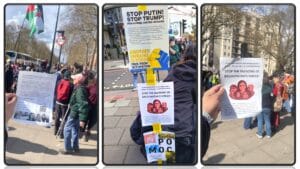
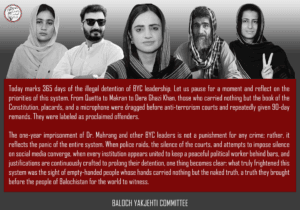
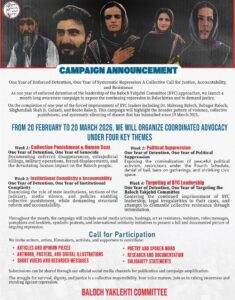
It has been one year since Dr Mahrang Baloch was taken into custody. One year since a doctor, a human rights activist, and a woman who dedicated her life to peaceful protest was locked away in a cell in Central Jail Huda, Quetta. She was detained on 22 March 2025, and she remains there today.
I want you to sit with that for a moment. One year. In solitary confinement.
Understanding the Balochistan Crisis: A Roadmap
Who is Dr Mahrang Baloch?
Dr Mahrang Baloch is not a criminal. She is a physician and the founder of the Baloch Yakjehti (Solidarity) Committee (BYC), an organisation established to document and resist human rights violations in Balochistan, Pakistan. She chose the path of peaceful, constitutional resistance. She organised sit-ins. She spoke at press conferences. She filed complaints. Everything she did was within the law.

And for that, she is sitting in a 20-square-metre cell with a small cot and a corner commode.
She recently turned 30 inside that cell.
The Crackdown of 22 March 2025
On 22 March 2025, Pakistani authorities launched what can only be described as a brutal and coordinated crackdown against the Baloch human rights movement. In a single sweep, they arrested many of the most prominent leaders of the Baloch Yakjehti Committee, known in English as the Baloch Solidarity Committee.
Those arrested included Dr Mahrang Baloch, Bebarg Zehri, Beebow Baloch, Shahji Sibghatullah, and Gulzadi Baloch. These were not militants. These were not armed fighters. These were organisers, activists, and community leaders who had committed themselves entirely to peaceful resistance.
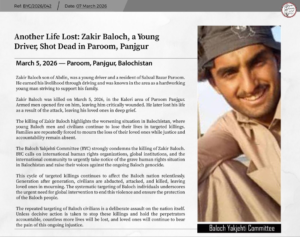
On the very night of these arrests, police killed a peaceful activist and two innocent passers-by and violently beat other protesters. That is the context in which these detentions happened. That is what “law and order” looked like in Balochistan that night.
The Price the BYC Leaders Are Paying
What has happened to Dr Mahrang and her fellow activists since their detention is deeply troubling, and each case deserves to be named and known.
Dr Mahrang Baloch — Arrested 22 March 2025
Dr Mahrang Baloch is a physician, human rights activist, and founder of the Baloch Yakjehti Committee. She has been held in solitary confinement since her arrest. She is kept away from other prisoners, with phone calls banned despite jail rules allowing two per week. Her court hearings are held inside the jail, when no outside observers are permitted to attend.
Her health has deteriorated seriously. She developed severe back and joint pain and was eventually diagnosed with a slipped disc and radiculopathy. A trained doctor, left to try and treat herself inside a bare prison cell.
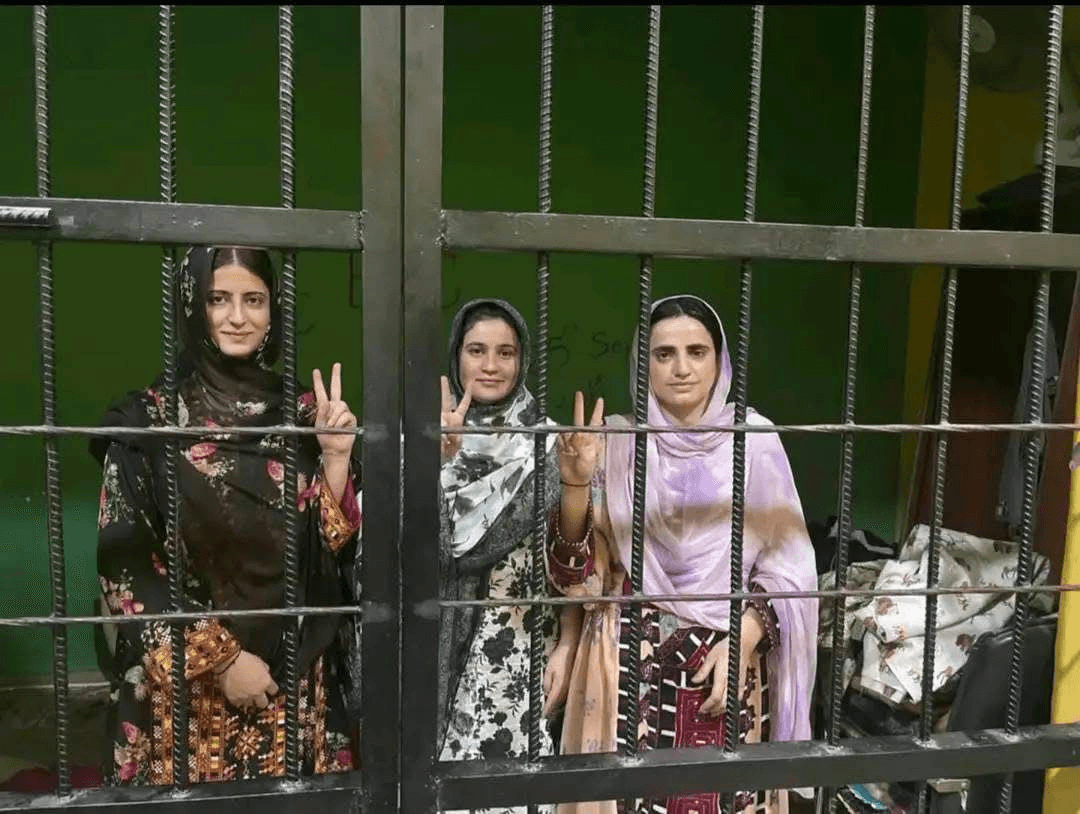
But perhaps the cruellest part is what has happened to her family. Her cousin Salal Baloch was forcibly disappeared. Her 19-year-old cousin Saifullah Baloch was picked up in March this year and remains missing. Her brother faces constant harassment from counter-terrorism authorities. Her sister Nadia Baloch, who simply spoke at press conferences calling for Dr Mahrang’s release, has also been charged.
This is not justice. This is collective punishment.
Bebarg Zehri — Abducted 20 March 2025
Bebarg Zehri is a central committee member of the BYC and one of Balochistan’s most prominent human rights defenders. He is a wheelchair user, having lost mobility in both legs after being injured in an attack by Pakistani security forces in 2010. Despite living with that disability, he never stopped speaking out against the atrocities carried out by Pakistani security and intelligence agencies in Balochistan.
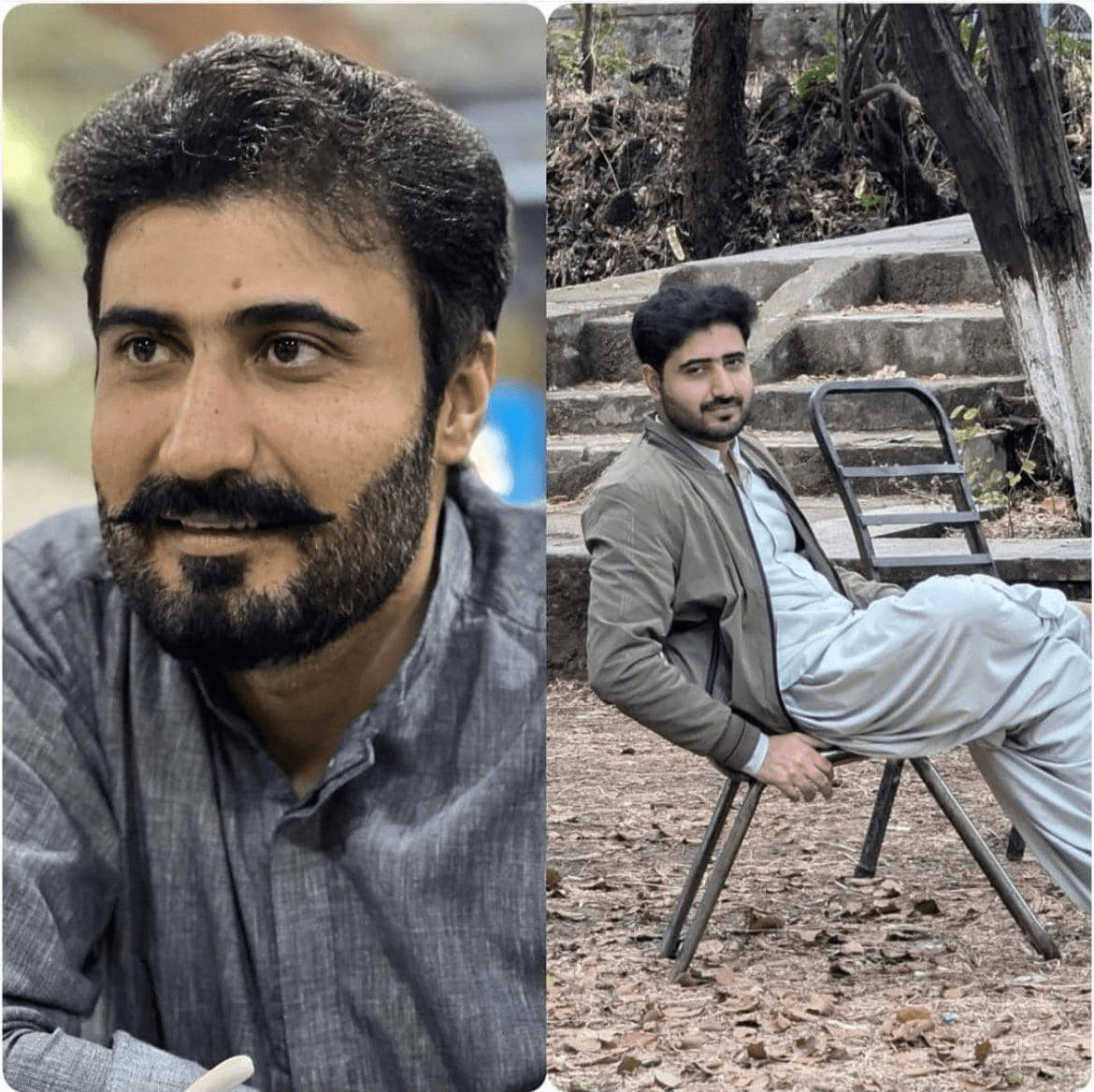
On 20 March 2025, at around 5 am, Pakistani police and the Counter Terrorism Division abducted Bebarg and his brother from their own home. A disabled man, dragged from his bed before dawn, for the crime of defending human rights.
Beebow Baloch — Arrested 22 March 2025
Beebow Baloch is a woman human rights defender and active member of the BYC, known for her vocal and peaceful advocacy for the Baloch community. She was arrested on 22 March 2025 and initially held at Hudda Prison in Quetta.
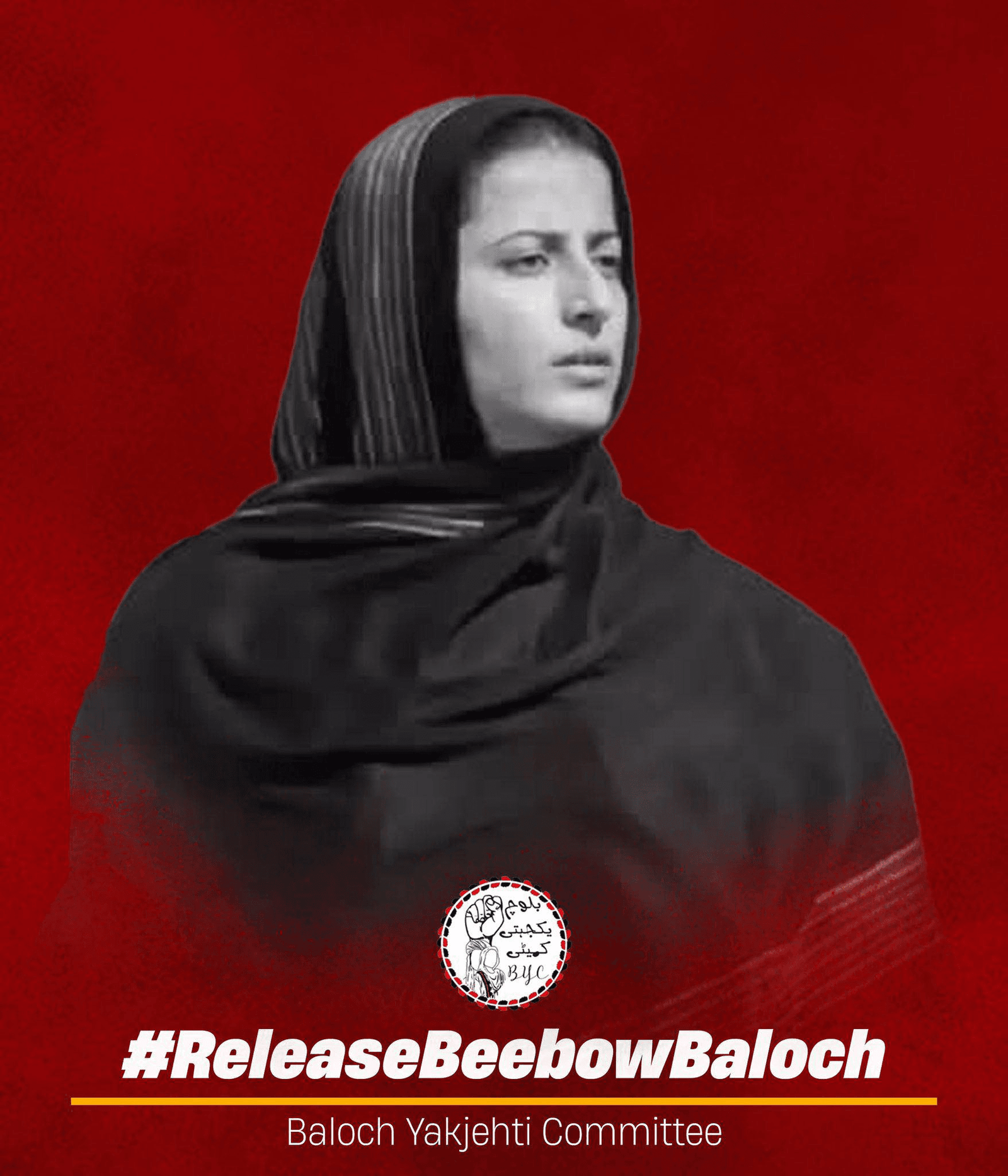
On 23 April 2025, she was forcibly removed from Hudda Prison by security forces who beat her and dragged her out of the facility. For several hours, nobody knew where she was or whether she was safe. She was eventually confirmed to have been transferred to Pishin Prison in Balochistan. Her only crime was peacefully calling for accountability for those responsible for human rights violations in Balochistan.
Sebghat Ullah Shah Jee (Shahji) — Abducted 29 March 2025
Sebghat Ullah Shah Jee, widely known as Shahji, is a BYC leader and the son of the late Molana Abdul Haque Baloch, a former Member of the National Assembly and a respected Baloch religious scholar.
On the night of 29 March 2025, his home was raided three times in a single night by masked officials from Pakistani intelligence agencies and the CTD. They harassed and intimidated his family, shouting aggressively to instil fear and trauma. Shahji was abducted along with his younger brother and two nephews. Three of them were released the following night. Shahji was not.
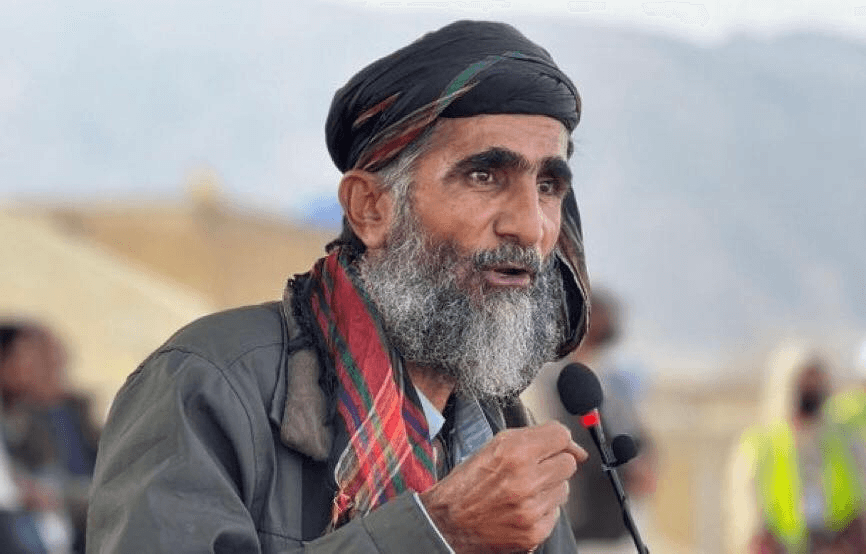
For three days, his family had no idea where he was. He was eventually transferred to Hudda Jail, Quetta, under dozens of fabricated charges. He has been presented in court multiple times, yet authorities have failed to produce a single piece of credible evidence against him. He has now been unlawfully detained for over a year.
Gulzadi Baloch — Arrested 7 April 2025
Gulzadi Baloch is a woman human rights defender and BYC member, known for her active participation in peaceful campaigns for Baloch rights and her calls for accountability for Pakistan security forces operating in the region.
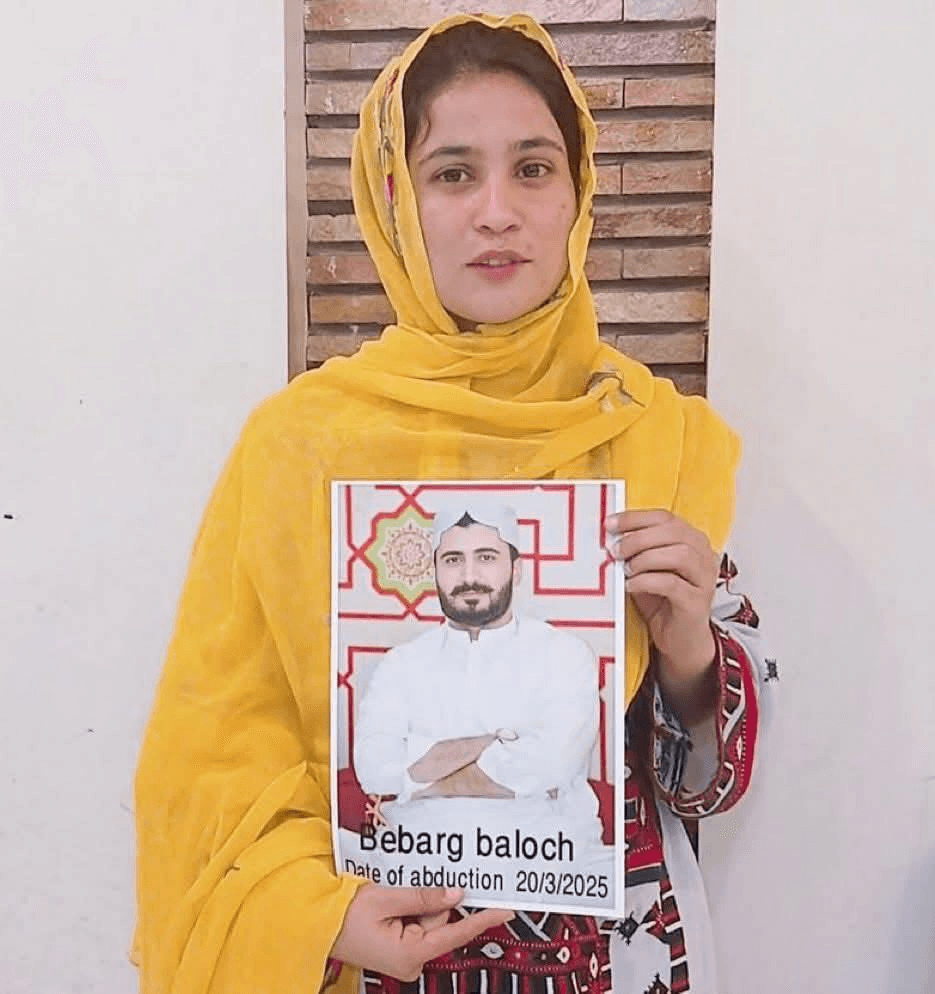
On 7 April 2025, Pakistani authorities arrested Gulzadi in Quetta, with reports of excessive violence used during her arrest. For several hours after she was taken, her family and colleagues had no information about her whereabouts or whether she was safe. She is currently held at Hudda District Prison under the Maintenance of Public Order Act — a law so restrictive it severely limits access to bail.
These are not isolated incidents. This is a pattern. A deliberate, coordinated effort to silence an entire movement by locking away its leaders one by one. None of them has been broken. None of them has given in. And that, perhaps, tells you everything you need to know about the strength of the Baloch people and the justice of their cause.
Mama Qadeer Baloch: The Man Who Walked 3,000 Kilometres for Justice
To understand the depth of the Baloch struggle for justice, you must know the story of one man — Abdul Qadeer Reki, known to the world as Mama Qadeer Baloch.
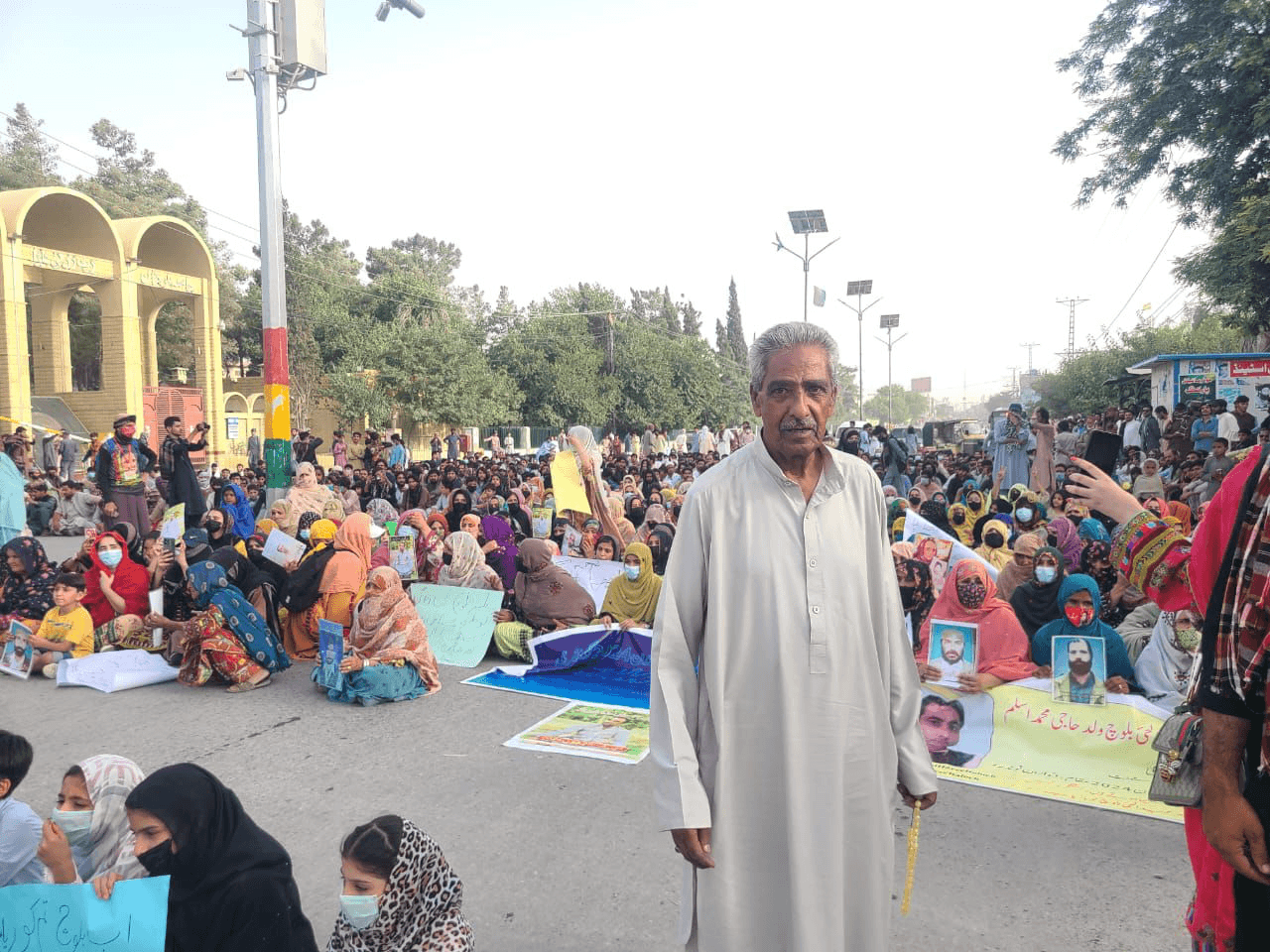
Mama Qadeer was born in 1940 in the small town of Surab in Balochistan‘s Kalat district. He was a political activist in his youth, a member of the National Awami Party, and was close to Baloch nationalist leader Nawab Khair Bakhsh Marri. He later set aside politics to work as a bank cashier, determined to provide his family, including his son Jalil, with a stable life and a good education. Jalil went on to earn a double master’s degree. Mama Qadeer was proud of him.
On 13 February 2009, Jalil Reki was forcibly disappeared. He was a political activist and a leader within the Baloch Republican Party. His family searched for him for nearly three years. In November 2011, his bullet-riddled body was found in a desolate area in Mand, in Balochistan’s Kech district.
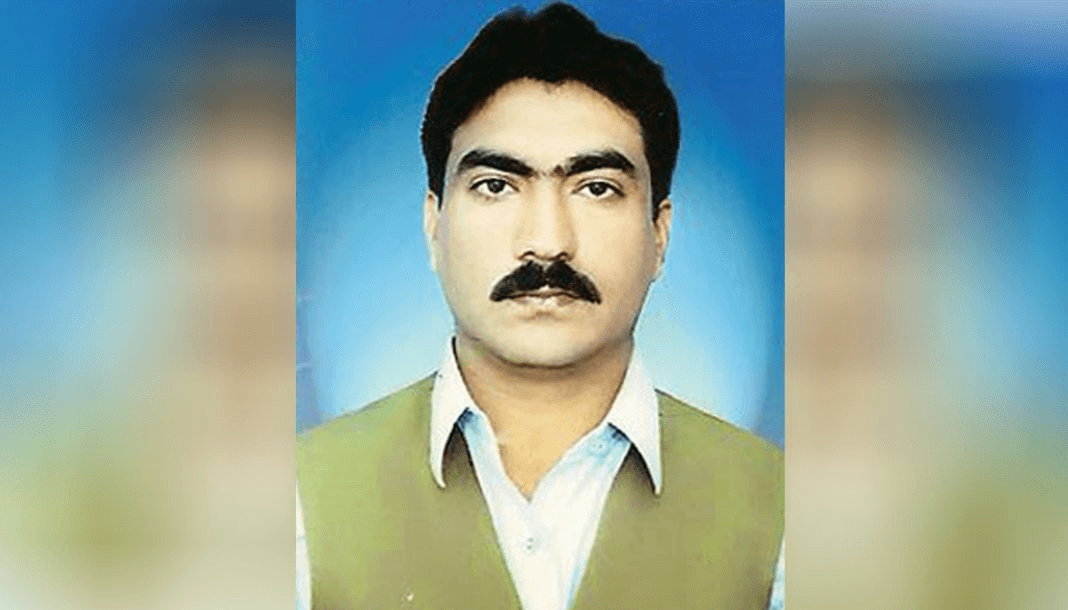
Most families, upon receiving such news, retreat into their grief. The shock, the trauma, and the fear of further reprisals are simply too great. Mama Qadeer did not retreat.
He was nearly 70 years old when he set up a protest camp outside the Quetta Press Club in 2009, alongside Nasrullah Baloch, the chairman of the Voice for Baloch Missing Persons (VBMP). He sat there, and he did not leave. Day after day, week after week, he held his ground, becoming the most visible, most constant human face of the families of Balochistan’s disappeared. Where others fell silent, Mama Qadeer spoke louder.
Mama Qadeer’s protest camp for Baloch missing persons continued for over 6,000 days, more than 16 years of uninterrupted resistance.
The Long March: 3,000 Kilometres on Foot
In October 2013, Mama Qadeer did something that captured the attention of the world. Accompanied by Farzana Majeed Baloch, the sister of disappeared student leader Zakir Majeed Baloch and a caravan of families carrying portraits of their missing loved ones, he began walking.
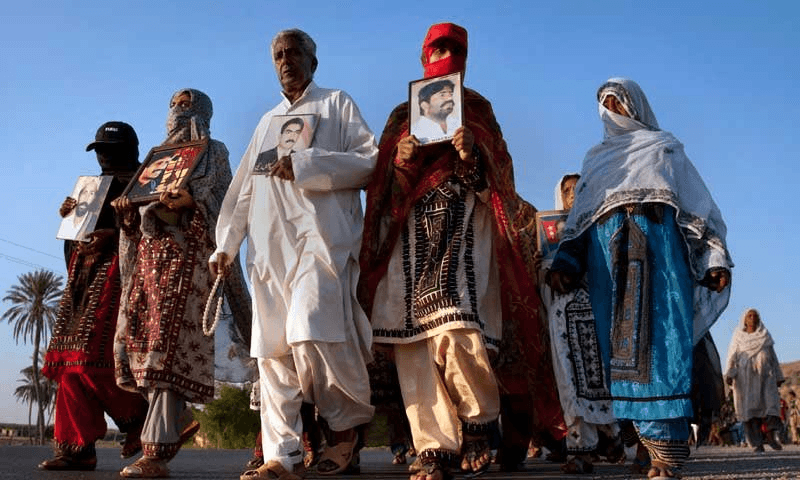
Not driving. Not protesting from a stage. Walking.
The march began in Quetta on 27 October 2013 and covered nearly 3,000 kilometres on foot, passing through cities across Pakistan before concluding in Islamabad. The group included women and children. They walked through the winter cold. They faced harassment from security agencies, particularly as they entered Punjab province. They kept walking.
The march lasted months and drew national and international attention to the crisis of enforced disappearances in Balochistan. It was one of the most extraordinary acts of peaceful resistance in Pakistan’s modern history: an elderly man, a grieving sister, and the families of the disappeared, walking the length of a country to demand that their loved ones be brought home.
Mama Qadeer did not stop there. He carried the Baloch cause to international forums, travelling to the United States, Europe, and Geneva to brief global human rights organisations on the situation in Balochistan. For sixteen years, he led hunger strike camps in both Quetta and Karachi. He served as Vice Chairman of the Voice for Baloch Missing Persons and remained active in advocacy until the very end of his life.
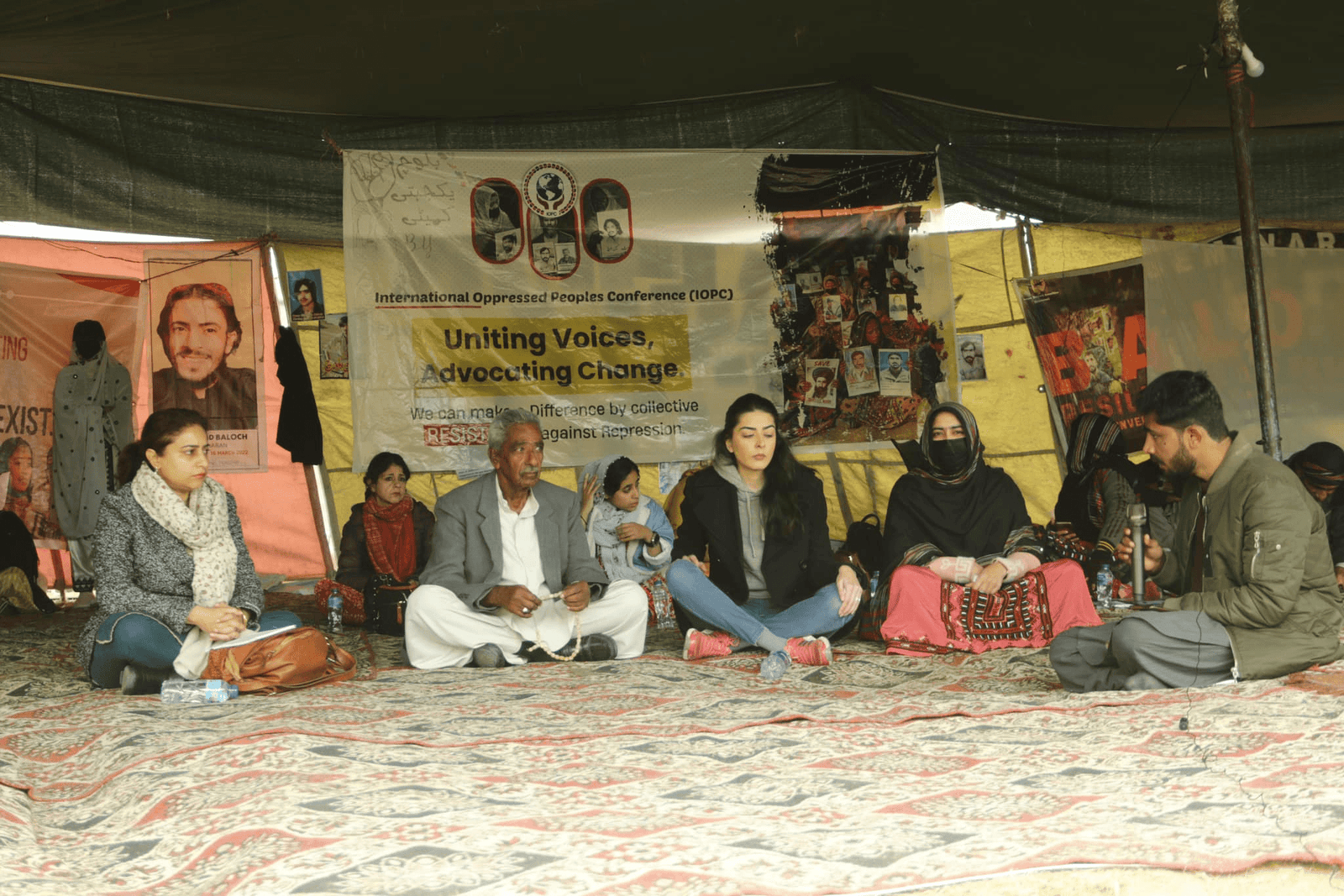
His work also laid the foundations for what came after. It was his years of tireless, visible protest that helped pave the way for the emergence of the Baloch Yakjehti Committee, led by Dr Mahrang Baloch, a movement that grew directly from the seeds Mama Qadeer had planted outside the Quetta Press Club more than a decade earlier.
The Loss of a Giant
Mama Qadeer Baloch passed away on 20 December 2025 at Arya Hospital in Quetta, at the age of 85, after a prolonged illness. He was laid to rest in his ancestral town of Surab, attended by hundreds of mourners, human rights activists, political leaders, tribal elders, women, and members of the public who had known him, marched beside him, or simply been moved by what he stood for.
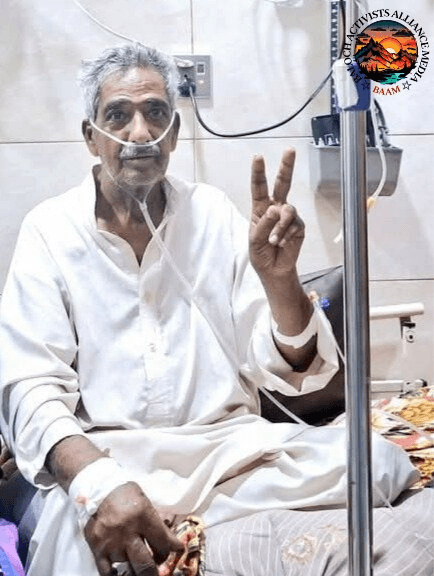
Leaders from across the political spectrum paid tribute. Manzoor Pashteen, chairman of the Pashtun Tahafuz Movement, described him as a symbol of peaceful resistance and resilience, noting that his struggle against enforced disappearances had inspired movements across ethnic and regional lines.
He was a retired bank employee who became a towering figure in the fight for human dignity. He lost his son, held his grandson’s hand as he identified the bullet-riddled body, and then continued walking towards justice, towards Islamabad, towards the world.
Mama Qadeer is gone. But the cause he gave his life to lives on in the streets of Balochistan, in the prison cells of Quetta, and in the hearts of every family still waiting for someone who has not come home.
What is Happening in Balochistan?
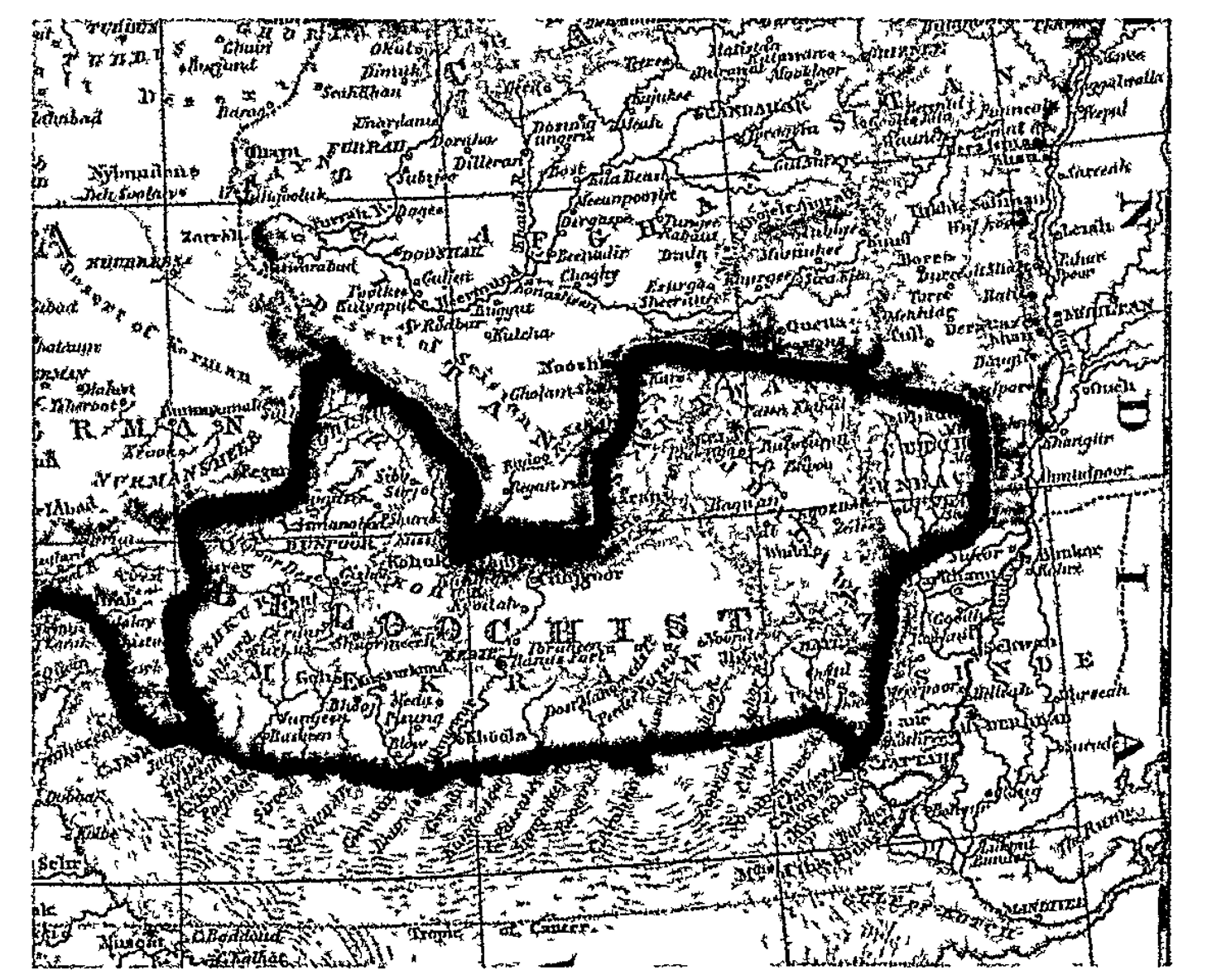
For those unfamiliar, maybe you have heard that Balochistan is Pakistan’s largest province, though, and realty, the Baloch reject this characterisation, viewing Pakistan as an occupying power since 27 March 1948, a point discussed in detail later in this article. Historically, Balochistan was not a province but a distinct homeland, divided into three parts among Pakistan, Iran, and Afghanistan without the consent of its people.
For decades, its people have suffered enforced disappearances, extrajudicial killings, and systematic state violence. Individuals are often taken at night and never return. Families wait for years, sometimes indefinitely, for news of their loved ones.
These human rights violations are not confined to Pakistani-controlled Balochistan. In Iranian-controlled Balochistan, Baloch communities also face executions, arbitrary arrests, and state violence, much of which remains underreported in international media. Across both regions, the Baloch continue to experience repression, caught between violence, silence, and a lack of global attention.
To understand why activists such as Dr Mahrang Baloch and Mama Qadeer exist, one must first understand the historical context of how Balochistan came to occupy its present circumstances.
Balochistan: A Nation Before Pakistan Existed
Balochistan is not simply a province of Pakistan and Iran. It is an ancient land with its own identity, people, rulers, and history stretching back centuries. While the region has long been inhabited by the Baloch people, a more defined political structure emerged with the establishment of the Khanate of Kalat in the 17th century. At its height, the Baloch territory extended across areas that are now part of Iran, Afghanistan, and present-day Pakistan. It functioned as a distinct political entity with its own system of governance.
Pakistan did not exist until 1947. Balochistan existed for over five centuries before Pakistan was ever created.
How the British First Came to Balochistan
The British did not come to Balochistan out of concern for its people. They came because of geography and power.
During the early nineteenth century, Britain was locked in a strategic rivalry with Russia across Central Asia, a contest historians later called the Great Game. To protect their empire in India from a potential Russian advance, the British needed control over the territories to the northwest, including Afghanistan and the lands that lay between. Balochistan sat directly in the path of that ambition.
In 1838, the British began establishing contact with Mehrab Khan, the ruler of the Khanate of Kalat in Balochistan, seeking safe passage for their army marching towards Afghanistan. A treaty was negotiated. But the relationship quickly deteriorated due to betrayal and manipulation by figures within Mehrab Khan’s own court who were working against him. Using this as a pretext, the British launched a military assault on Kalat.
The Fall of Kalat and the Death of Mehrab Khan — 1839
On 13 November 1839, a British force of over 1,000 soldiers under Major-General Thomas Willshire arrived at the walls of Kalat. Mehrab Khan had fewer than 2,000 men and five guns to defend his people. He did not surrender. He fought back.
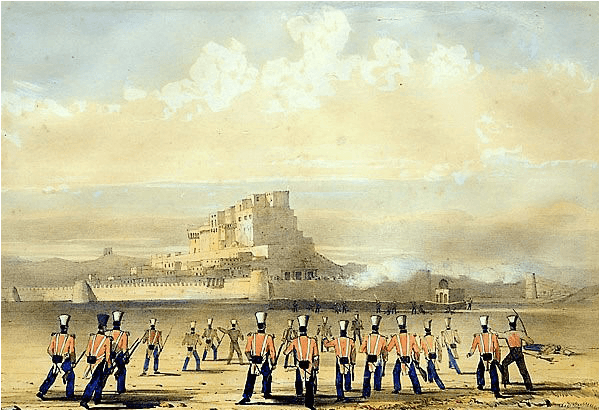
The British stormed the fortress using cannons. Mehrab Khan died defending his homeland, alongside his chiefs and soldiers. He gave his life for the independence of his nation and the sovereignty of his people. His death is considered one of the most tragic events in the history of Balochistan.
After the battle, the British themselves found evidence proving that Mehrab Khan had been innocent of the accusations made against him. It did not matter. Kalat had already fallen. The British installed a fourteen-year-old distant relative, Shah Nawaz Khan, on the throne and placed one of their own officers as regent.
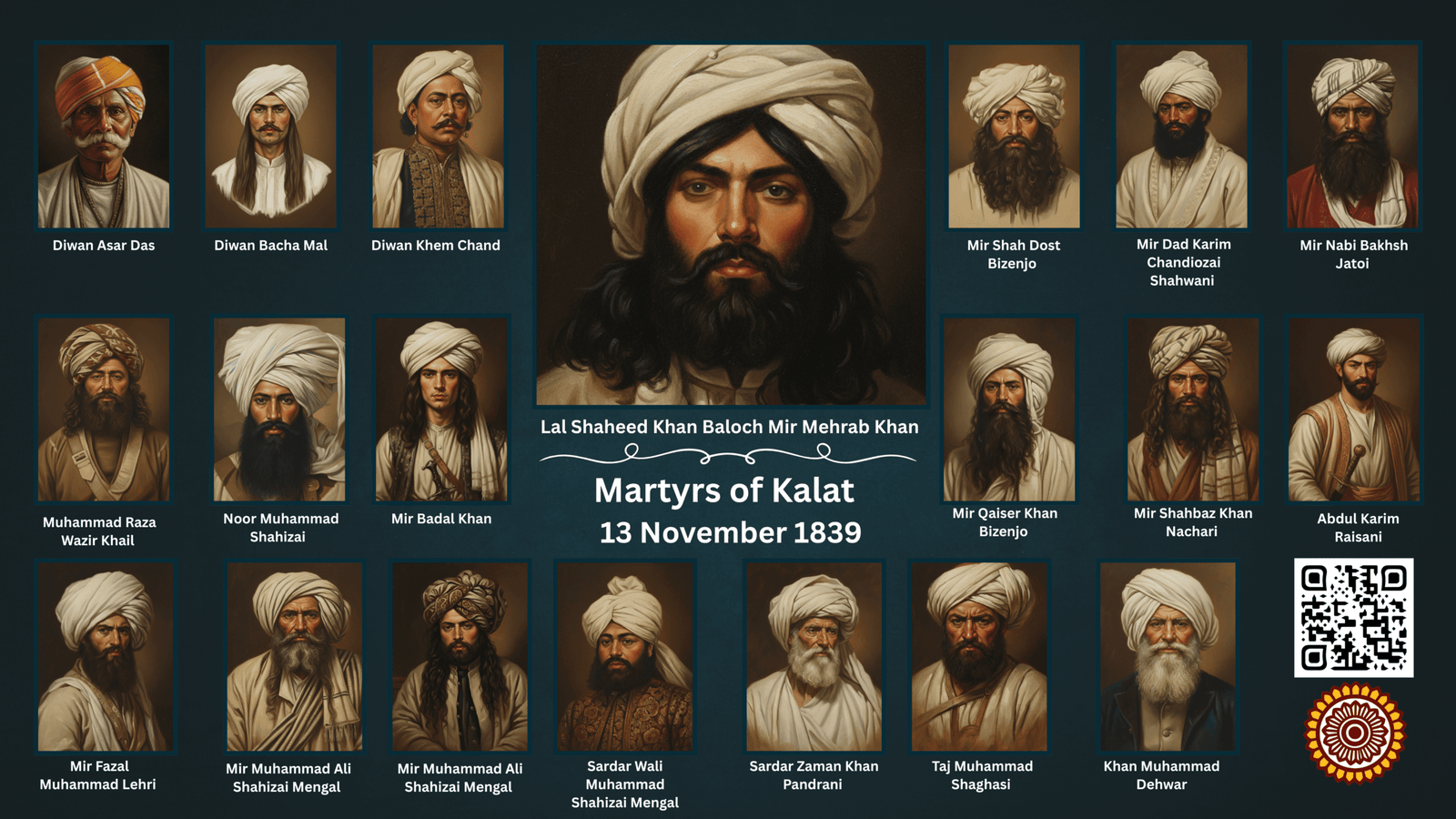
The resistance that followed was immediate and widespread. Baloch tribes across the region rose. The Marri tribe inflicted a devastating defeat on British forces at Kahan, killing four British officers and 178 soldiers. Other confrontations followed at Dhadur and Kotra. The Baloch people never simply accepted what had been done to them.
How Balochistan Was Divided Into Three Parts
Perhaps one of the greatest injustices inflicted upon the Baloch people was not the wars themselves, but what came after the deliberate carving up of their homeland into pieces.
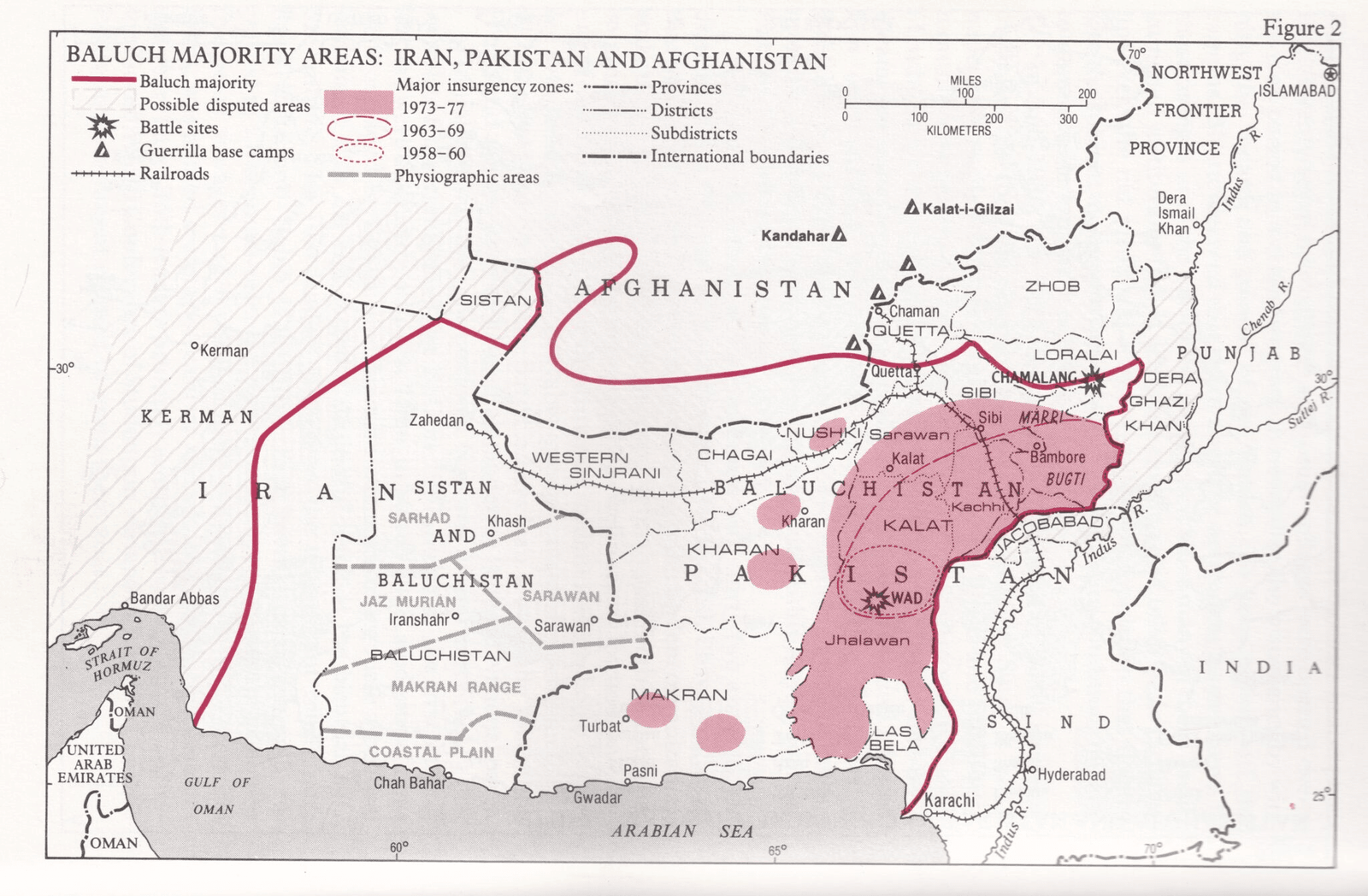
The British drew two artificial borders that cut through Balochistan and divided it amongst neighbouring territories. The Goldsmith Line in 1871 handed Western Balochistan to Iran. The Durand Line in 1893 gave Northern Balochistan to Afghanistan. In Eastern Balochistan, the remaining portion stayed under British influence and maintained treaty relations with the British Crown.
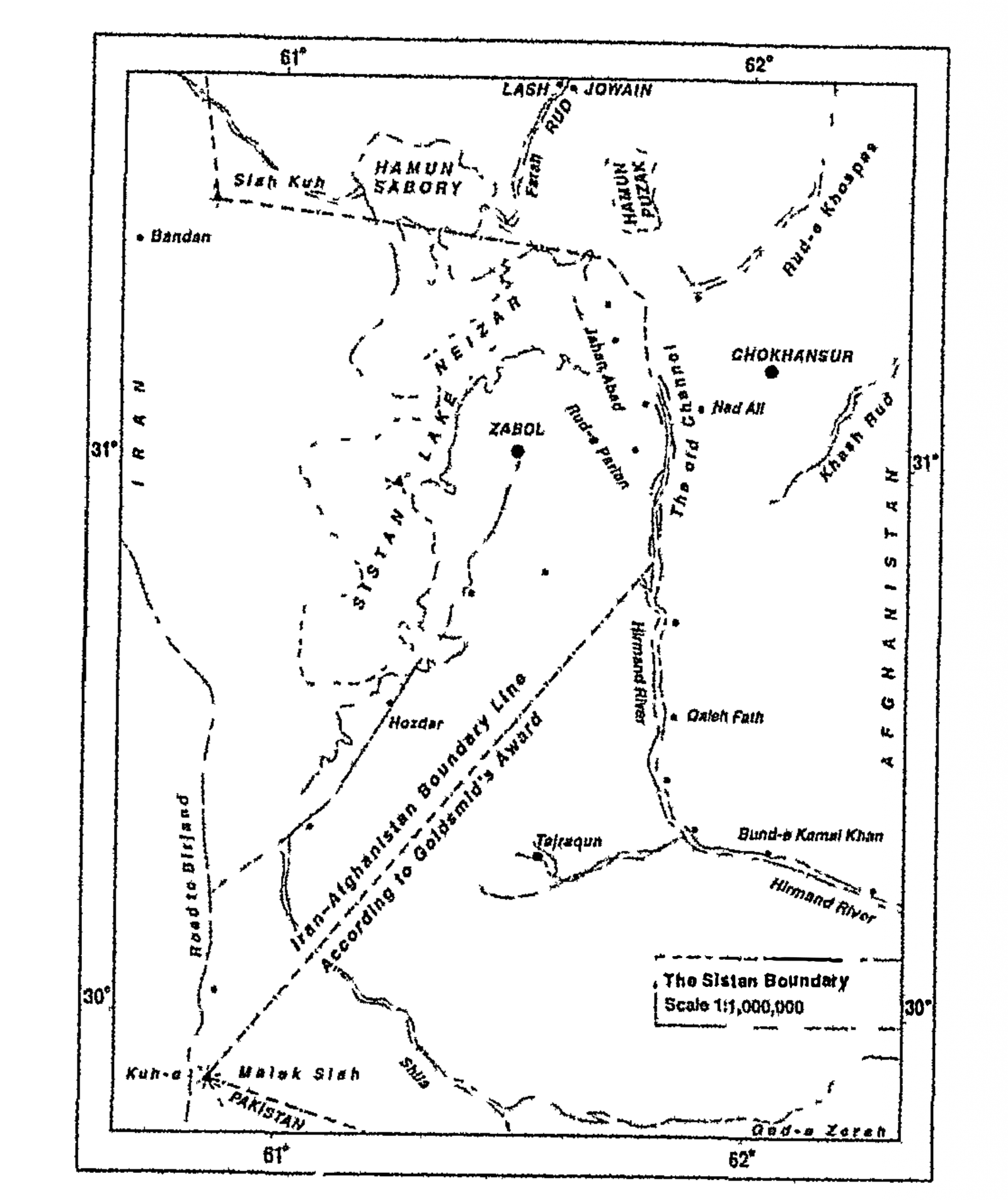
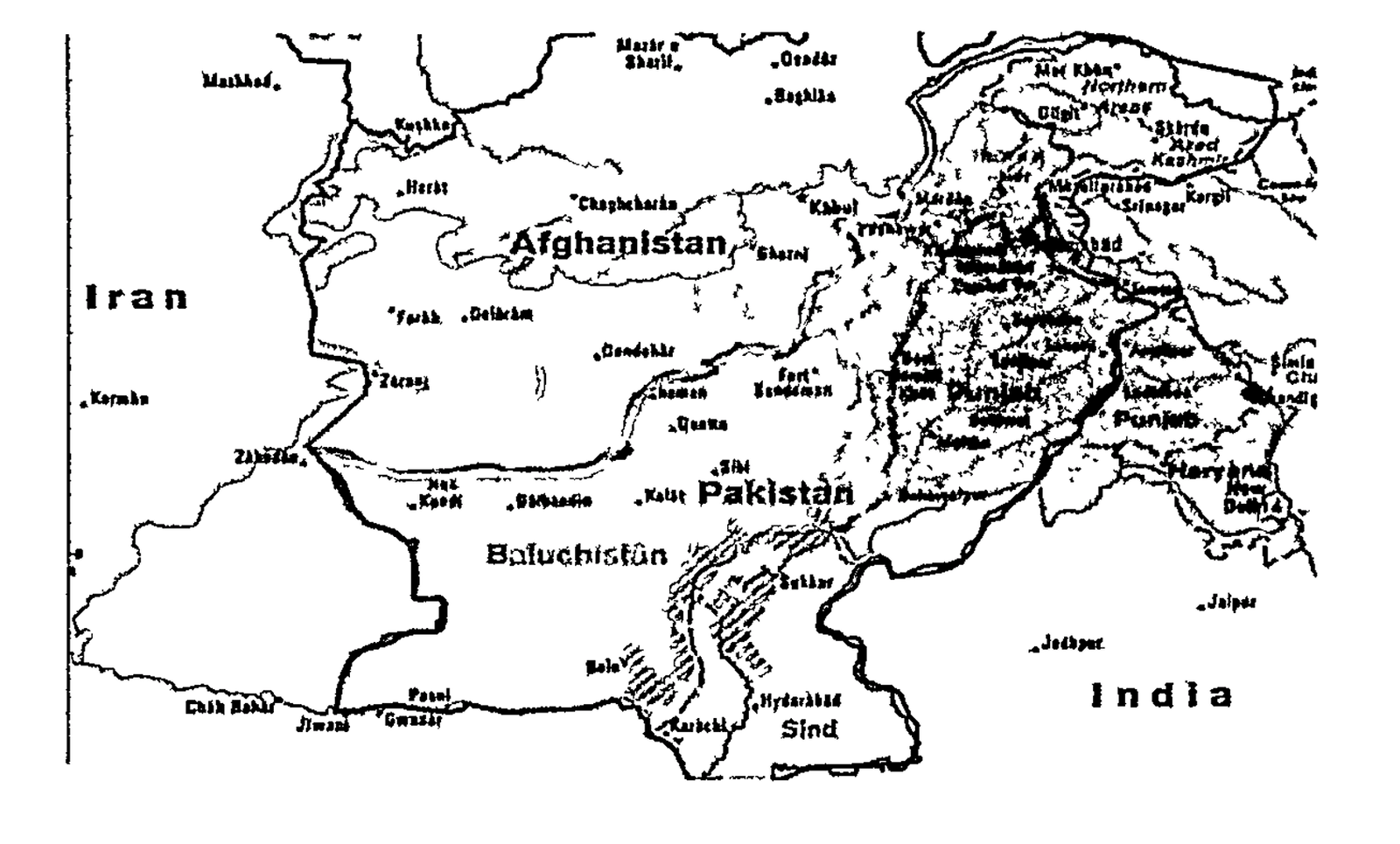
In a single generation, one nation had been sliced into three parts by lines drawn on a map in London. The Baloch people were never consulted. The division was entirely arbitrary, designed to serve the strategic interests of a foreign empire. To this day, the Baloch people are divided across three countries, Pakistan, Iran, and Afghanistan, with no say in how those borders were drawn or why.
11th August 1947 — Balochistan Independence Day
The 11th of August is a date that the rest of the world has largely forgotten. But for the Baloch people, it is one of the most important dates in their entire history.
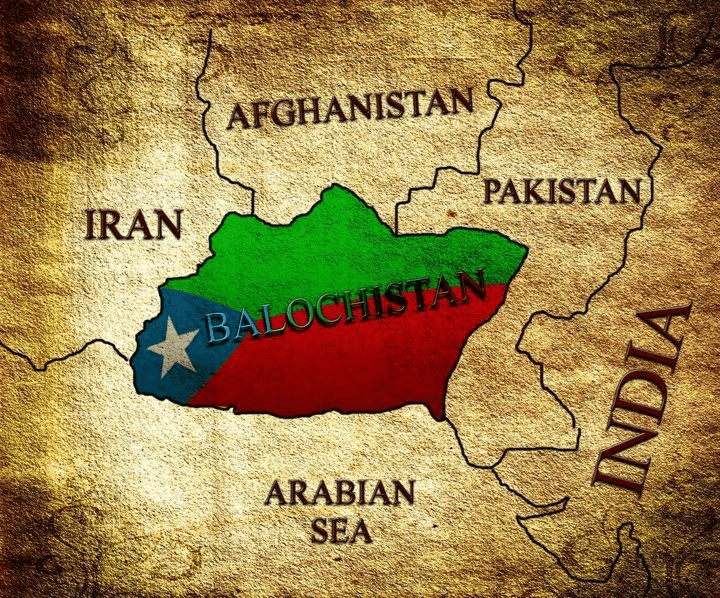
While India and Pakistan were preparing to celebrate their independence on 14th and 15th August 1947, something significant had already happened four days earlier. On 11th August 1947, Khan Mir Ahmad Yar Khan, the ruler of the Khanate of Kalat, stood before his people in the capital city of Kalat and formally declared independence. His announcement was broadcast on All India Radio in the following words:
“The State of Kalat has decided to regain its independent status as of 11th August 1947. The Khan of Kalat declares that Kalat shall henceforth be a sovereign and independent state.”
This was not a unilateral act made in secret. It was backed by a formal agreement. On 4th August 1947, just days before the declaration, both the departing British colonial administration and the leaders of the Pakistani movement had signed a Standstill Agreement with the rulers of Kalat, effectively acknowledging its sovereignty just four days before Pakistan’s creation. Pakistan itself, in signing that agreement, had recognised Kalat as an independent sovereign state. This was not a secret; it was reported in The New York Times on 12th August 1947 and documented in the international press.
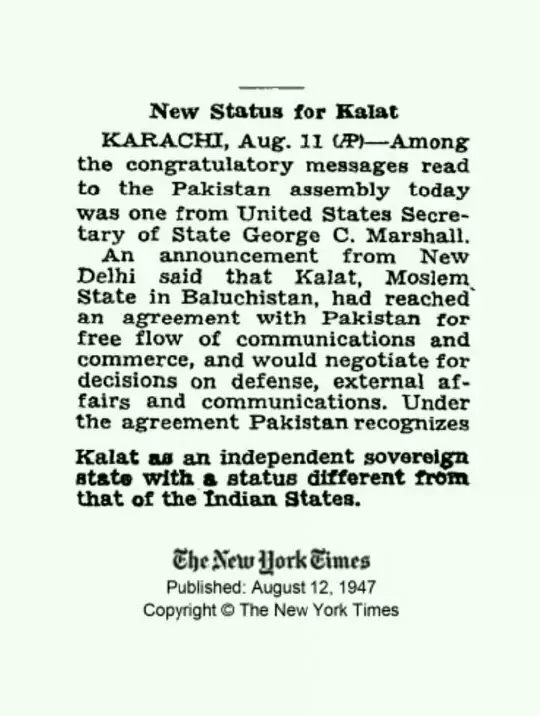
Within 24 hours of the declaration, the Khan of Kalat established a House of Commons and a House of Lords in Balochistan. It had its own democratic parliament. These democratic bodies voted in favour of Kalat’s independence multiple times between 14th December 1947 and 25th February 1948. The people’s representatives spoke clearly and repeatedly; they did not want to join Pakistan.
Pakistan ignored every vote.
Between October 1947 and February 1948, Pakistan mounted increasing pressure on the Khan of Kalat to join. When he refused and referred the matter to his parliament, Pakistan signed separate accession instruments with Lasbela, Kharan, and Makran, leaving a truncated and landlocked Balochistan. When even that did not break the Khan’s resolve, the Pakistani army moved into Pasni, Jiwani, and Turbat in Makran on 27th March 1948. The Khan capitulated under military force. Balochistan’s independence was over.
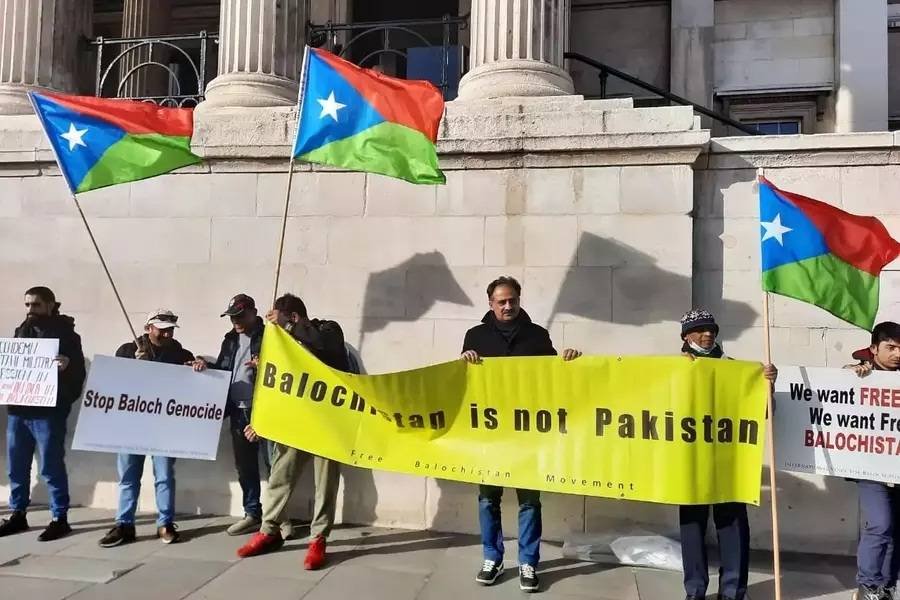
Today, 11th August, is observed by the Baloch nation around the world as Balochistan Independence Day. It is marked by the hoisting of the Balochistan flag, awareness campaigns, seminars, sit-ins, and global protests, a day to remind the international community of what was done to their nation and to demand recognition of the Baloch people‘s right to self-determination and freedom. The 11th of August is not simply a historical date. It is a reminder that Balochistan was a real, recognised sovereign nation and that its people have never stopped demanding that the world remember it.
Balochistan’s Independence and Pakistan’s Forced Annexation
When the British finally left the Indian subcontinent in 1947, the Khanate of Kalat did not simply hand itself over. The Khan of Kalat made a strong legal case for independence, arguing that Kalat had always maintained a direct treaty relationship with the British Crown, not with British India. He pointed to the 1876 treaty, in which the British had formally committed to respecting the independence of Kalat.
On 27 March 1948, Pakistani troops marched in and took control. What the British had gained through treaties was never supposed to be transferable to a third party. It did not matter. Balochistan was annexed by force.
To this day, 27 March is observed by the Baloch people as Black Day, the anniversary of the day their independence was taken from them. Armed resistance began almost immediately. The first insurrection broke out in 1948 and continued until 1950. It was only the beginning of a struggle that has never truly ended through the conflicts of the 1950s, 1960s, and the brutal war of 1973 to 1977 launched under Prime Minister Zulfikar Ali Bhutto, right through to the ongoing violence, enforced disappearances, and imprisonments of today.
Pakistan’s Interest in Balochistan’s Resources
So why does Pakistan continue to hold Balochistan with such force? The answer, at least in part, lies beneath the ground.
Balochistan is extraordinarily rich in natural resources. Consider this one fact alone: the Sui Gas Field, located in the Dera Bugti District of Balochistan, was discovered in 1952 and has been producing natural gas ever since. Today, it produces 8.5 million cubic metres of gas every single day. Pipelines carry that gas across Pakistan, heating homes in Punjab and powering cities hundreds of miles away.
And yet, in Balochistan itself, the very land where this gas comes from, most areas have no gas supply at all. Families in the same so-called province that powers the rest of Pakistan are still burning wood to cook their meals and keep warm. Let that sink in for a moment. The land beneath their feet has fuelled Pakistan’s economy for over seventy-eight years, and the people living above it cannot even heat their homes.
The town of Sui has supplied natural gas to the entire country for decades, yet its own residents have faced severe gas shortages, receiving little benefit from the wealth extracted from their own land. The so-called province produces nearly a quarter of Pakistan’s total gas supply, yet its people remain among the most impoverished in the country.
This is not an accident. This is a pattern. The resources flow outward. The poverty stays behind. And anyone who speaks out about it, like Dr Mahrang Baloch, ends up in a prison cell.
Minerals of Balochistan
| Minerals | Estimated Reserves | Locations |
|---|---|---|
| COPPER | 5.87 billion tons (Reko Diq), 412 million tons (Saindak), 400 million tons (Dasht-e-Kain) | Reko Diq, Saindak, Dasht-e-Kain |
| GOLD | 42 million ounces (Reko Diq), 1.47 tons annually (Saindak) | Reko Diq, Saindak |
| IRON ORE | 273 million tons total; 200 million tons (Dilband/Mastung), ~75 million tons (Chagai District deposits) | Dilband/Mastung, Pachin Koh, Chigendik, Chilgazi |
| CHROMITE | 500 million tons | Muslimbagh, Pishin, Kila Saifullah, Lasbela, Khuzdar, Zhob |
| COAL | 1 billion tons | Mach, Shahrag, Duki, Chamalang, Quetta |
| MARBLE (ONYX) | ~37 million tons (Julil: 10 million tons; Mashkicha: 12 million tons; Butuk: 15 million tons) | Chagai and nearby areas |
| SULFUR | 50 million tons | Koh-i-Sultan |
| LEAD AND ZINC | Significant reserves (exact quantities unspecified) | Various locations |
| GEMSTONES | Includes emeralds, garnets, tourmaline, aquamarine, ruby, bastnaesite | Various locations |
| LITHIUM | Reserves present but quantities unspecified | Various locations |
Then there are the Reko Diq gold and copper reserves — one of the largest undeveloped gold and copper deposits in the world, located in Balochistan. The profits from these resources have historically flowed outward, away from the Baloch people themselves. The land is rich. The people are kept poor. And those who speak out are made to disappear or extrajudicially killed.
Why China is Interested in Balochistan
In recent years, a new dimension has been added to Balochistan’s struggle: the growing influence of China.
The China-Pakistan Economic Corridor, known as CPEC, is a multi-billion-dollar infrastructure and investment project that runs directly through Balochistan. At its heart is the deep-water port of Gwadar, which sits on the Arabian Sea and serves as a gateway connecting Central Asia, South Asia, and beyond. For China, Gwadar represents a strategically vital route for trade and energy that bypasses potential naval blockades elsewhere.
China’s Projects & Investments in Balochistan and Pakistan
Despite hosting major CPEC projects like Gwadar Port, most Chinese investment is directed to other regions of Pakistan, while Balochistan receives only a small share.
| Project | Region | Approx. Investment | Location | Year | Notes |
|---|---|---|---|---|---|
| Total CPEC Investment | All Pakistan | ~£50 billion (~$62 billion) | Nationwide | 2015–2026 | CPEC total investment covering energy, infrastructure, transport & economic zones. |
| Gwadar Port Expansion | Balochistan | ~£820 million (~$1.02 billion) | Gwadar | 2016–2025 | Deep-sea port expansion with new berths and cargo terminals. |
| Eastbay Expressway Phase I | Balochistan | ~£145 million (~$179 million) | Gwadar | 2017–2024 | Improves connectivity to Gwadar Port. |
| Khuzdar–Basima Road (110 km) | Balochistan | ~£95 million (~$118 million) | Interior Balochistan | 2018–2025 | Road infrastructure upgrade for interior regions. |
| New Gwadar International Airport | Balochistan | ~£185 million (~$230 million) | Gwadar | 2017–2025 | Major transport hub to support port & city. |
| China Hub Coal Power Plant (1320 MW) | Balochistan | ~£1.55 billion (~$1.9 billion) | Hub District | 2015–2023 | Supplies energy to national grid. |
| Water Supply & Desalination Projects | Balochistan | ~£115 million (~$144 million+) | Gwadar & surrounding areas | 2017–2025 | Includes freshwater systems for local communities. |
| Social Infrastructure (Hospitals, Training) | Balochistan | ~£88 million (~$110 million+) | Gwadar | 2017–2025 | Hospitals, vocational institutes, and training facilities. |
| Balochistan Total Investment | Balochistan | ~£4–8 billion (~$5–10 billion approx.) | Balochistan-wide | 2015–2026 | Includes major infrastructure & energy projects; exact figures not officially published. |
| Other Regions / National Projects | Punjab, Sindh, KP & national | ~£42–46 billion (~$52–57 billion approx.) | Other regions of Pakistan | 2015–2026 | The majority of investment goes to Punjab, Sindh & KP; Balochistan receives only a minimal share. |
For the Baloch people, however, CPEC has brought little benefit. Many Baloch nationalists view the project as a new form of colonisation, one where a foreign power is extracting the wealth of their land while the local population is excluded, displaced, and silenced. Rather than addressing the legitimate grievances of the Baloch people, the Pakistani state has responded to resistance with more force, more disappearances, and more arrests, including those of the very peaceful activists we are speaking about in this article and other Baloch activists.
The Numbers Tell the Story
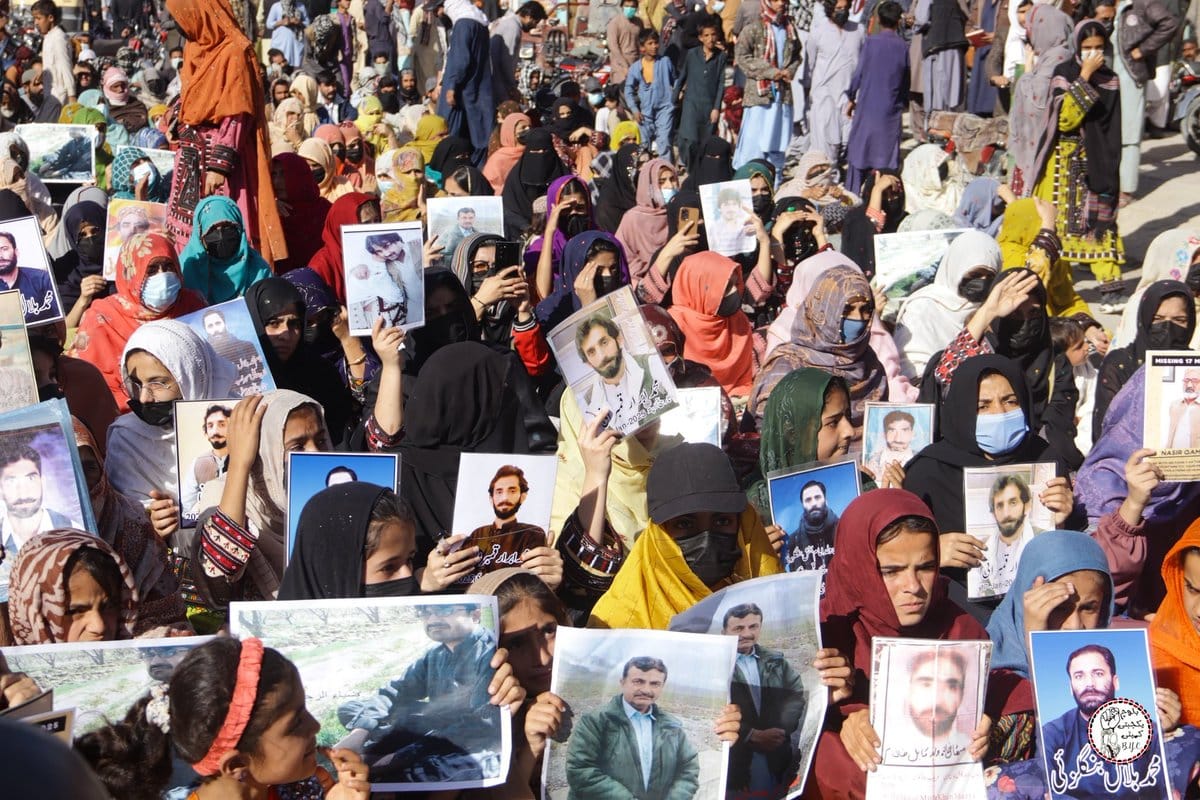
In 2025 alone, the BYC documented over 1,200 cases of enforced disappearance. Human rights organisations have estimated that at least 47,000 Baloch people have gone missing since the year 2000. Journalists who attempt to report on the situation are killed or silenced. The mainstream media in Pakistan is permitted only to run official military press releases when covering Balochistan, because in Pakistan media is controlled by Pakistan official and has high censorship.
These are not statistics. These are fathers, sons, daughters, and mothers. Real people from real families who deserve the world’s attention. Dr Mahrang Baloch and her fellow dedicated their lives to making sure the world knew these names. And now she, too, is one of those locked away in silence.
Why This Matters to All of Us
Some might ask why this matters to those of us living in the UK or other parts around the world. It matters because human rights are not a local issue. Silence in the face of injustice is not neutrality; it is complicity.
Dr Mahrang herself wrote recently from her cell, and her words have stayed with me:
“When a state turns its power against human rights groups and peaceful political actors, it reveals not strength, but weakness.”
She is right. And those of us with the freedom to speak must use our voices for those who have had theirs taken away.
What You Can Do
The most important thing right now is awareness. Share this story. Talk about Balochistan. Demand that your elected representatives raise this issue at an international level.
You can also read Dr Mahrang Baloch’s own words, written directly from her cell and published by The Guardian. I strongly encourage you to read it in full:
Read Dr Mahrang Baloch’s article in The Guardian — theguardian.com
One year is too long. Silence has a weight to it, as Dr Mahrang wrote herself. Let us make sure the world does not stay silent.
A final word
The history I have shared here is merely a fraction of a 78-year struggle for justice. To fully map the division of Balochistan, or the deep wounds left by the 1948 occupation, would require a much larger canvas than a single article allows.
I will return to these historical and political complexities another day.
But for those currently suffering in torture cells and the narrow rooms of the disappeared, for those killed extrajudicially, and for the families who still do not know if their loved ones are alive or dead, history is not a textbook. It is the immediate, daily cost of a silence that the world has yet to break.
About the Author
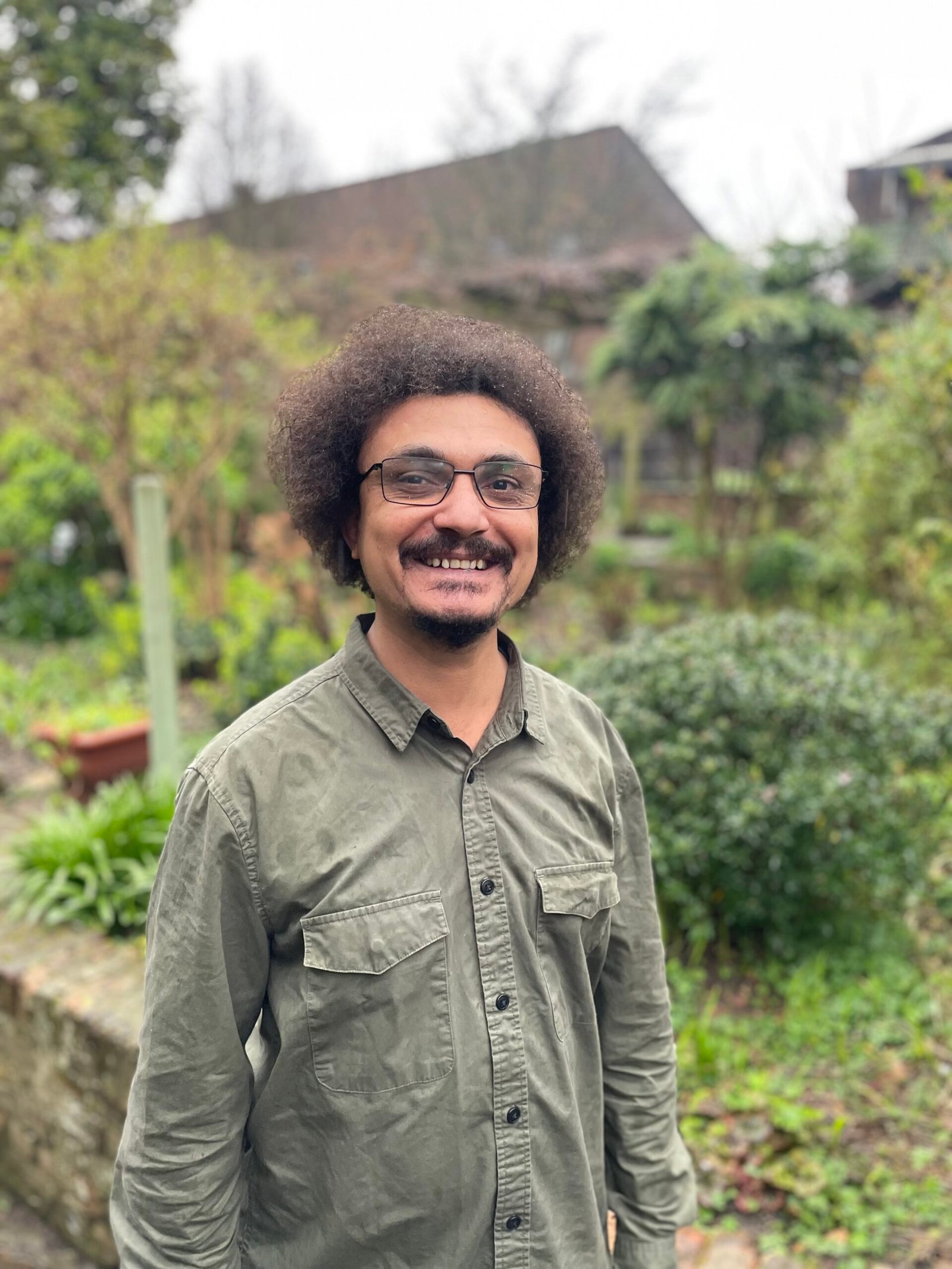
Aomar Karim is a political activist based in the United Kingdom, dedicated to raising global awareness about human rights in Balochistan.
Stand in Solidarity: You can support the movement by signing the open letter at bit.ly/balochsolidarity.