
 Join Aomar Karim’s Official Channel
London, 8 April 2026
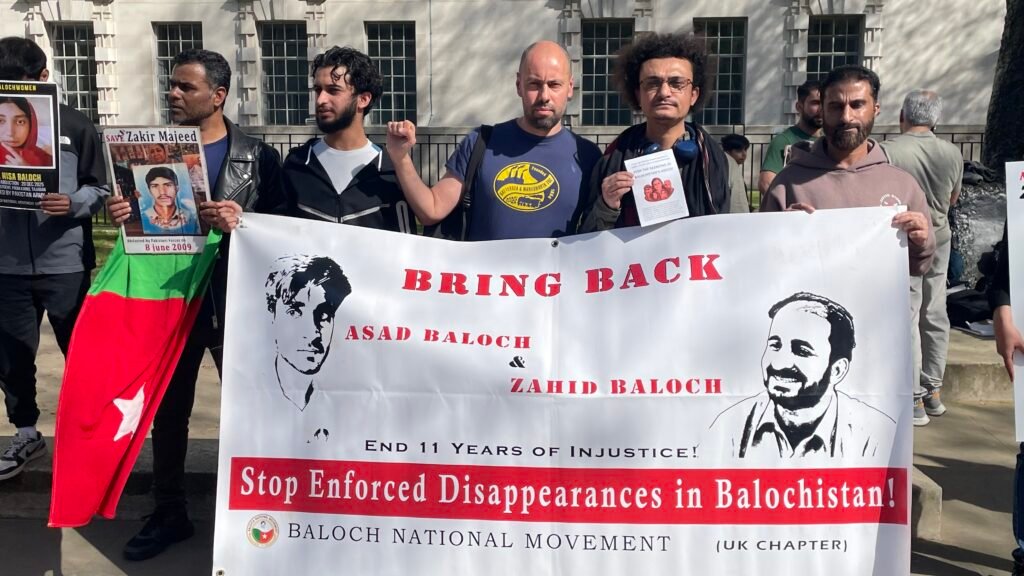
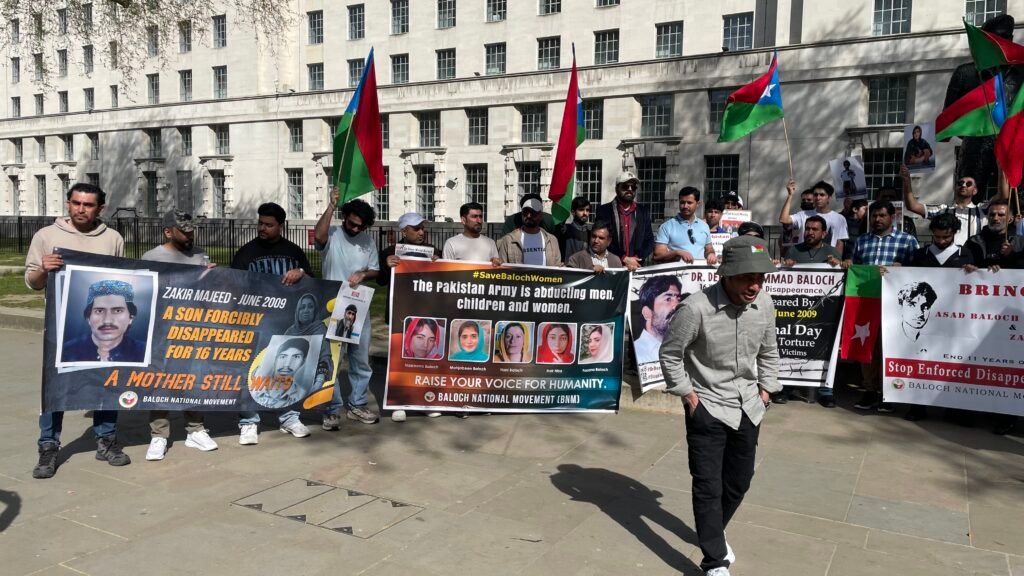
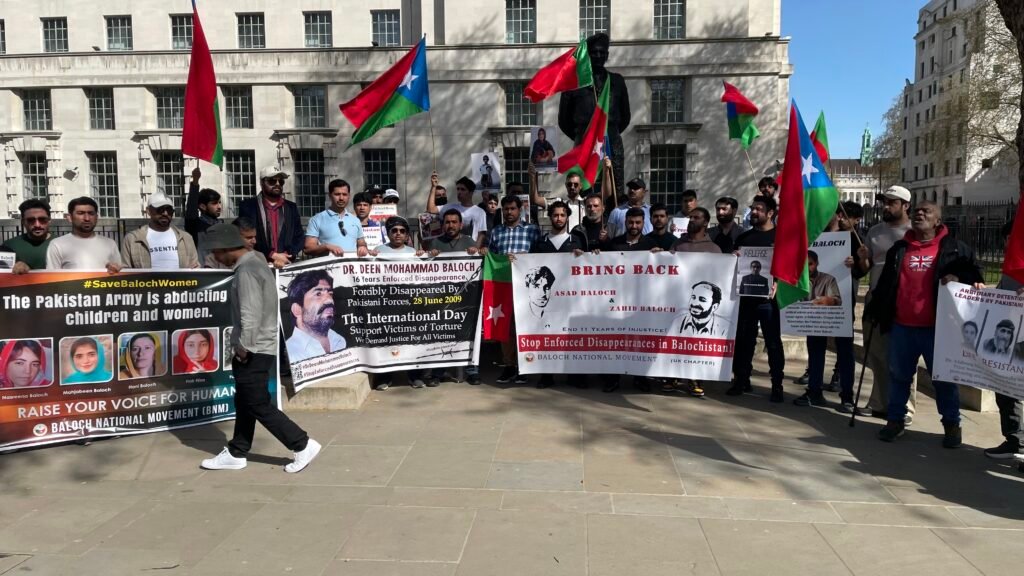
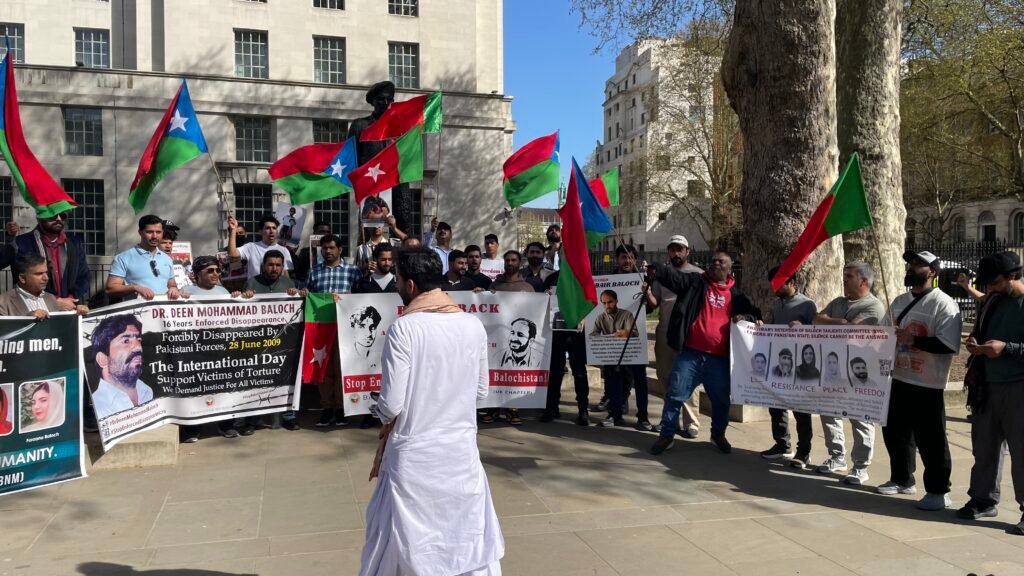
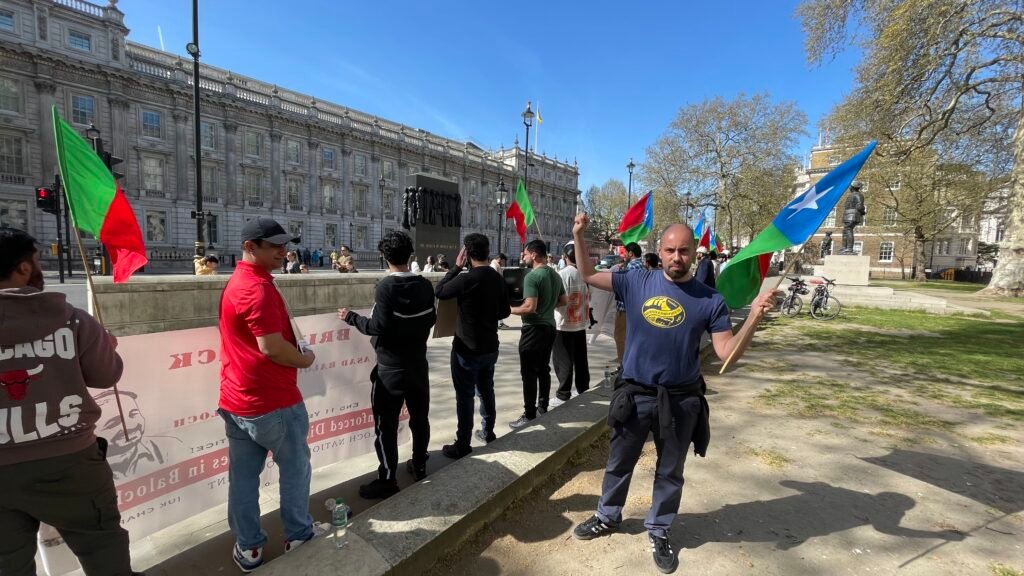
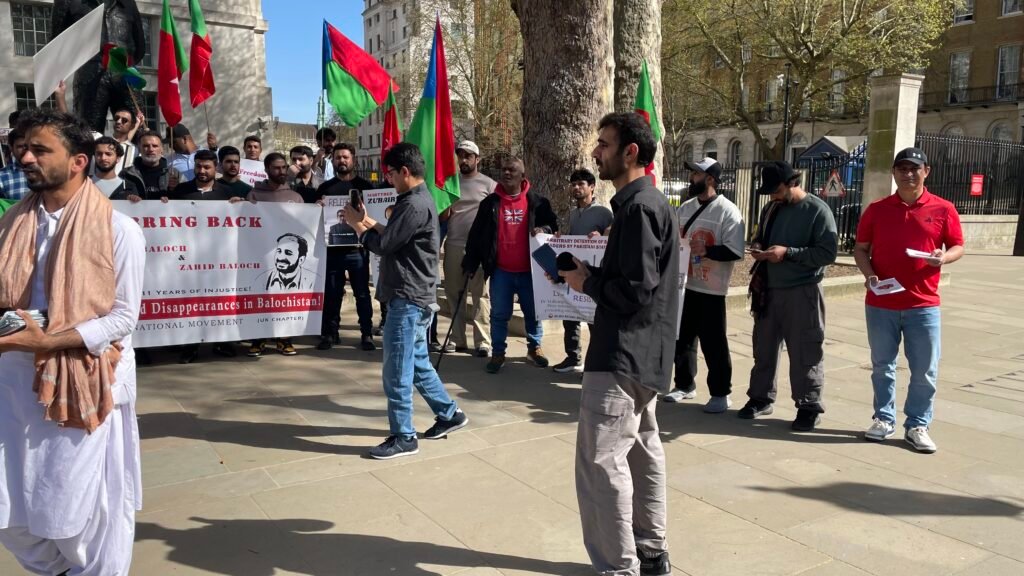
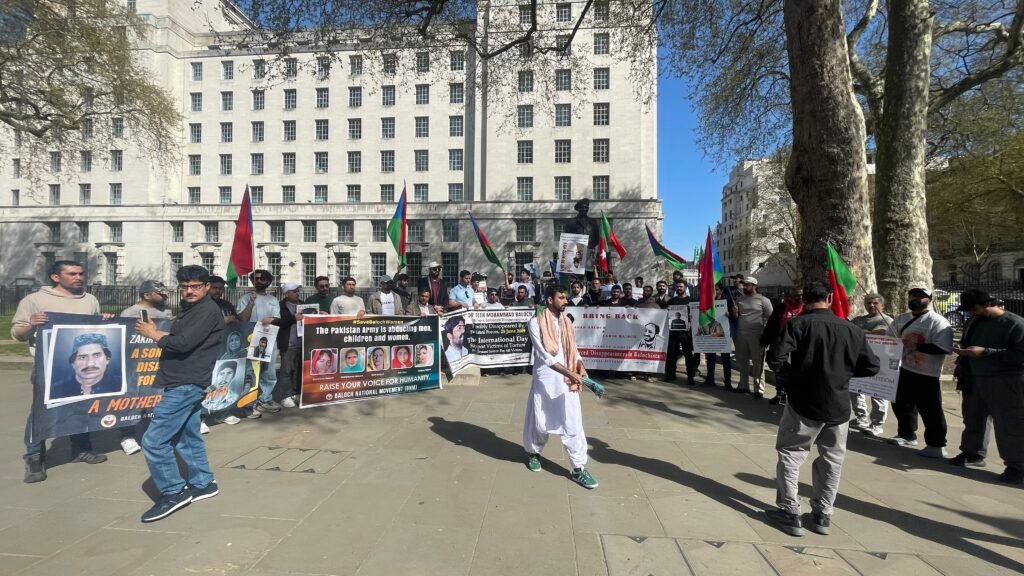
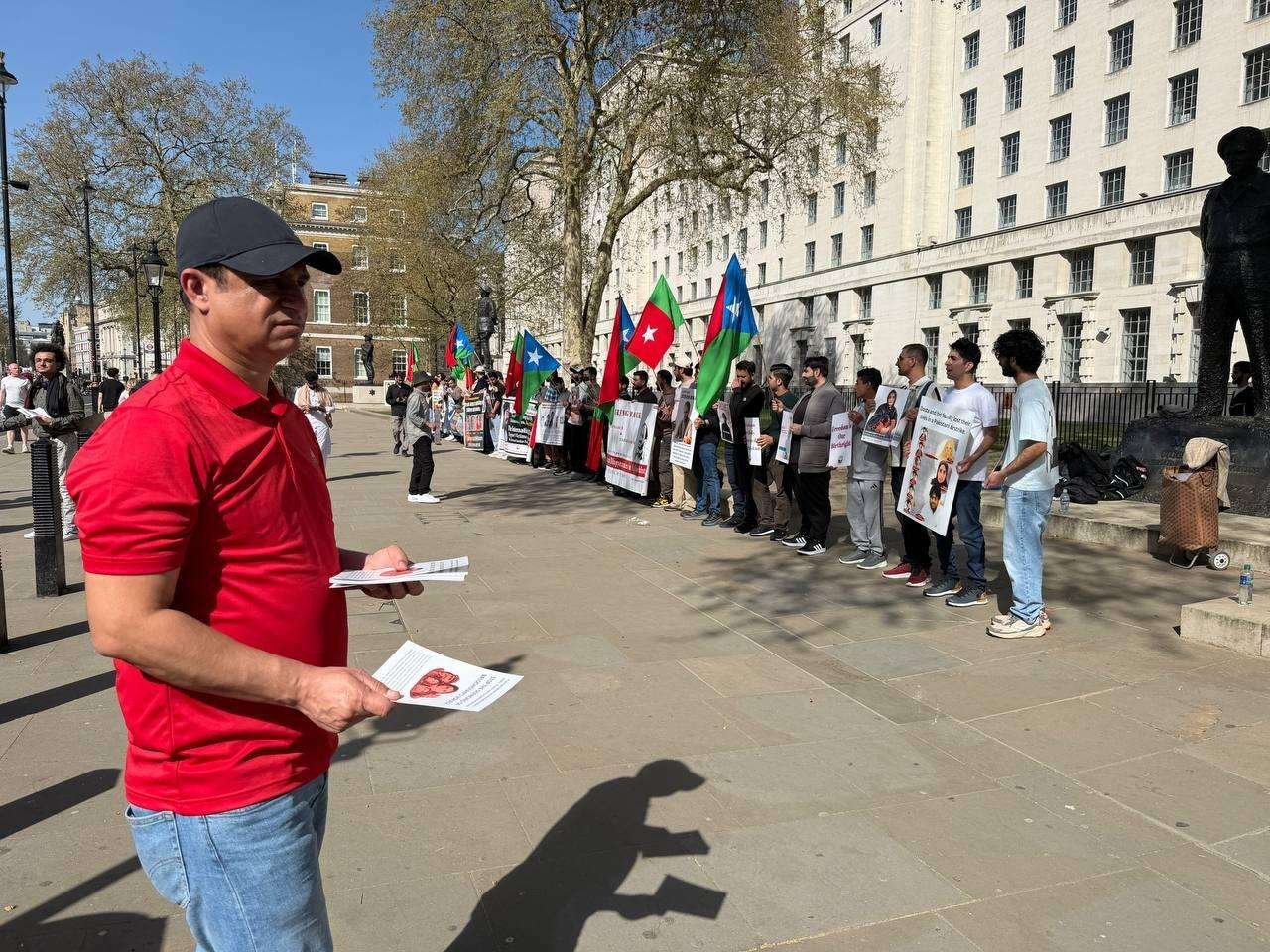
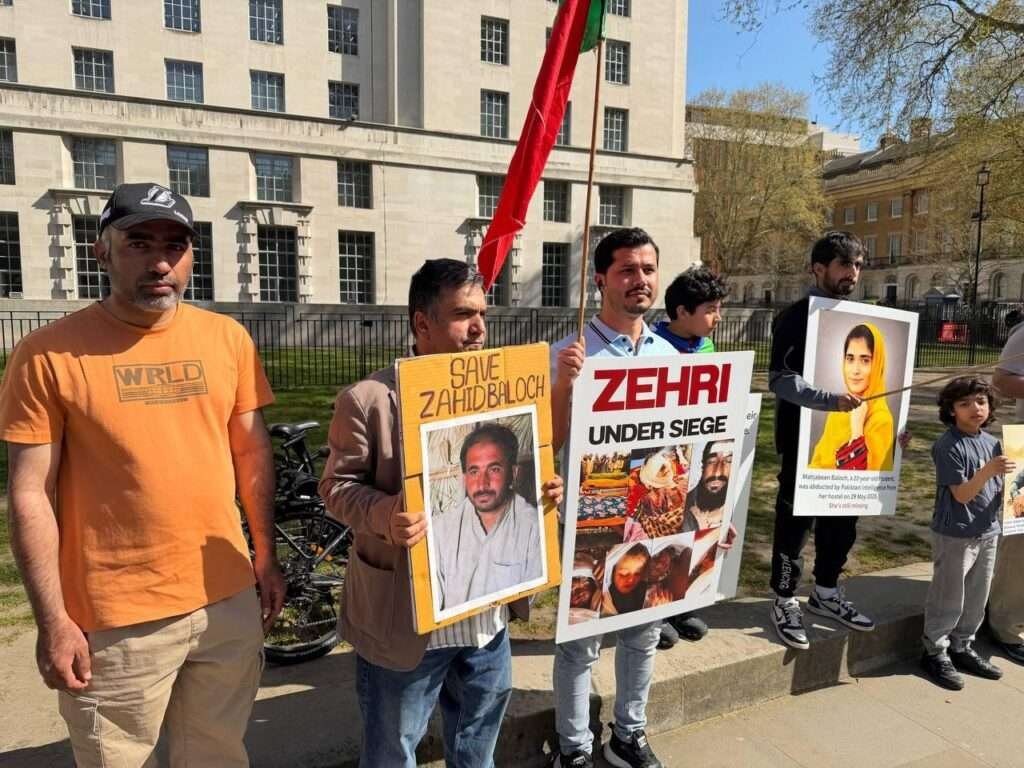
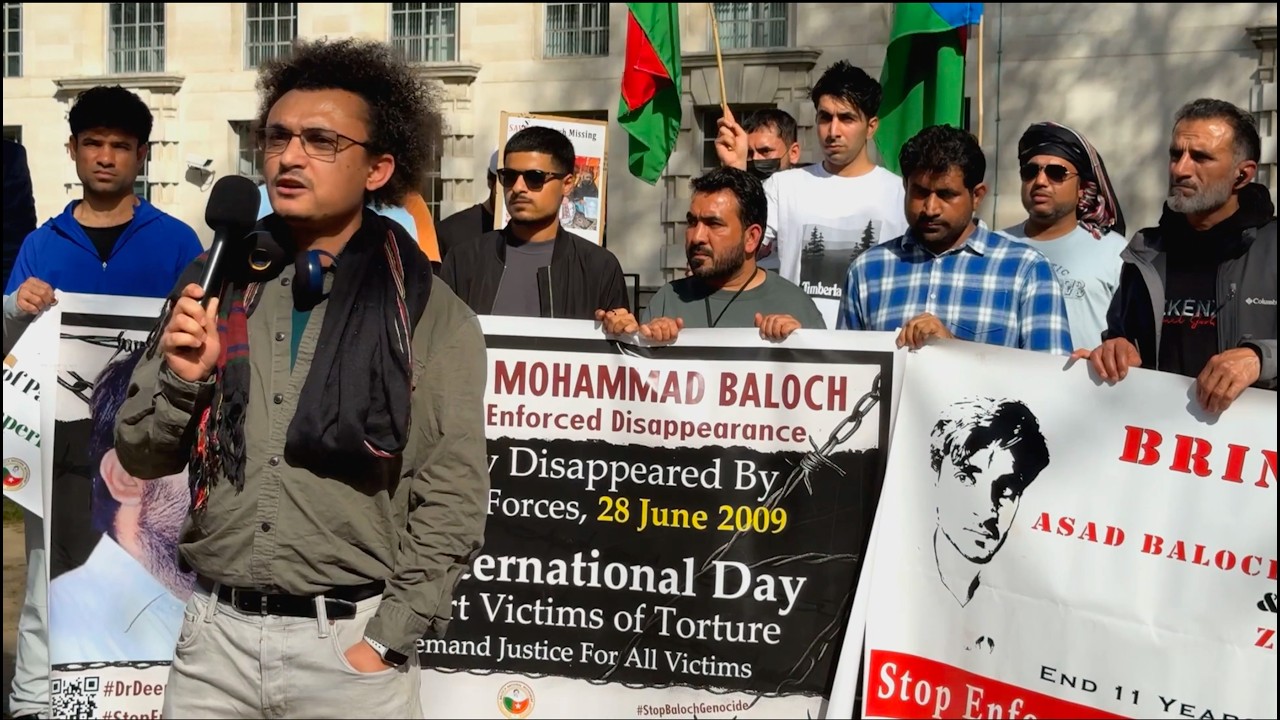
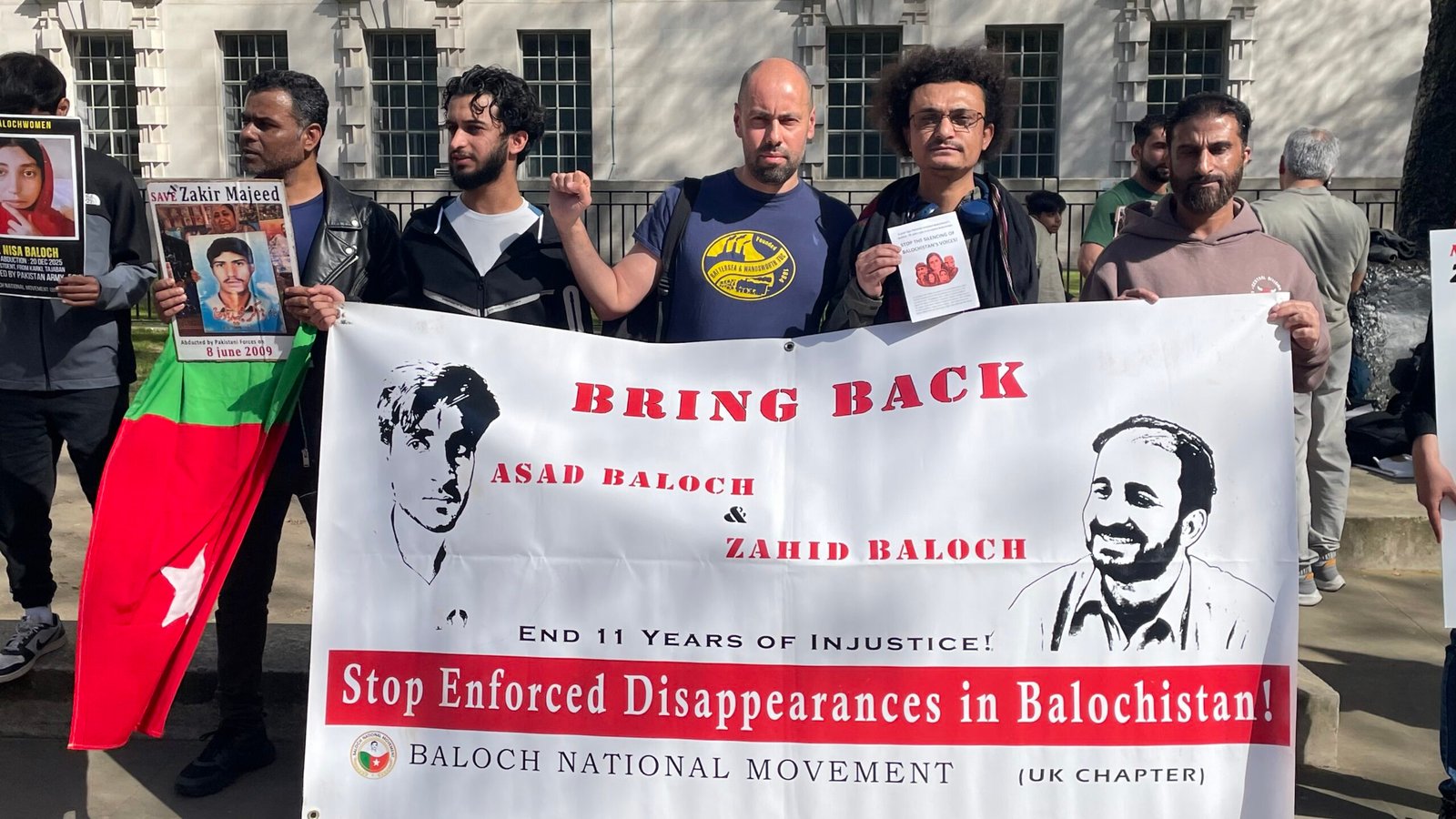
Members of the Baloch National Movement (BNM) UK Chapter gathered outside 10 Downing Street on Wednesday afternoon, staging a peaceful protest as part of the organisation’s month-long global campaign highlighting the ongoing human rights crisis in Balochistan.
The demonstration, held between 2 pm and 4 pm, drew Baloch political activists, community members and supporters to the heart of Westminster, directly in front of the official residence of the British Prime Minister. A campaign awareness activity followed from 4 pm to 6 pm.
The protest forms part of BNM’s Global Campaign, running from 10 March to 9 April 2026, focusing on three core issues: enforced disappearances, extrajudicial killings, and the collective punishment of the Baloch nation.
The protest also drew a show of solidarity from Sacha Ismail, a socialist and trade union activist based in London. Ismail, who is active in trade unions UNISON and FBU and serves as Policy & Education Officer for the Trade Union network in the Green Party of England and Wales, joined the demonstration outside Downing Street in support of the Baloch cause, standing alongside Baloch activists in calling for justice and human rights in Balochistan.
“Your Silence Is a Choice” — Aomar Karim Speaks Out
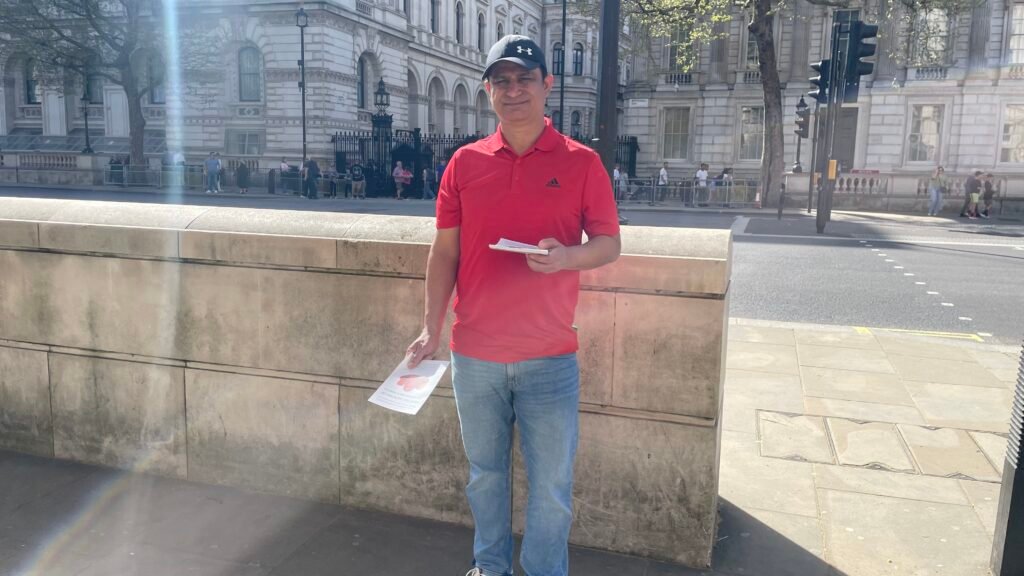
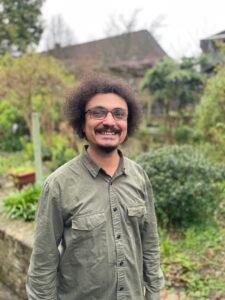
Among those taking part was Baloch political activist Aomar Karim, who delivered a powerful address to Western human rights advocates and political activists.
Speaking outside Downing Street, Karim challenged the inconsistency of the international human rights community, stating that activists who readily raise their voices for Palestine, Gaza, Kashmir and African nations fall conspicuously silent when it comes to Balochistan.
“All Western political activists speak about Palestine, Gaza, Kashmir, African countries — but when it comes to Balochistan, their pens stop, and their words disappear,” Karim said. “I ask every human rights activist: why do you raise your voice for one part of the world but not another? If you are part of any human rights or political movement, it is your duty to raise your voice everywhere — including Balochistan.”
A Nation Occupied: The History Behind the Movement
In his address, Karim urged the international community to understand the historical context of the Baloch struggle.
“To understand Balochistan, you must know its history,” he said. “On 27 March 1948, Pakistan occupied Balochistan. Before that occupation, Balochistan was a free and independent country. When the Western world divided India and created the state of Pakistan, Balochistan was absorbed by force.”
Karim made clear that he does not recognise Pakistani authority over his homeland.
“I do not recognise myself as Pakistani. I am Baloch. My identity is Balochistan,” he declared. “Balochistan was occupied on 27 March 1948, but from that day until today, the Baloch people have never stopped their struggle. We continue our activities and we will continue them until our very last breath.”
When challenged over his use of a Pakistani passport to travel to the United Kingdom, Karim responded directly: “Yes, I use a Pakistani passport, but I do not accept Pakistan as my country. Pakistan is a colonial occupying power. I use that passport because it is the only document the colonial system allows me to have. It does not define my identity or my allegiance.”
A Vow to Continue
Closing his address, Karim reaffirmed the determination of the Baloch movement to press forward.
“We will continue our struggle until the last breath of our lives,” he said, to applause from those gathered on Whitehall.
The BNM UK Chapter called on British parliamentarians and human rights organisations to formally acknowledge the situation in Balochistan and engage with Baloch representatives.