
 Join Aomar Karim’s Official Channel
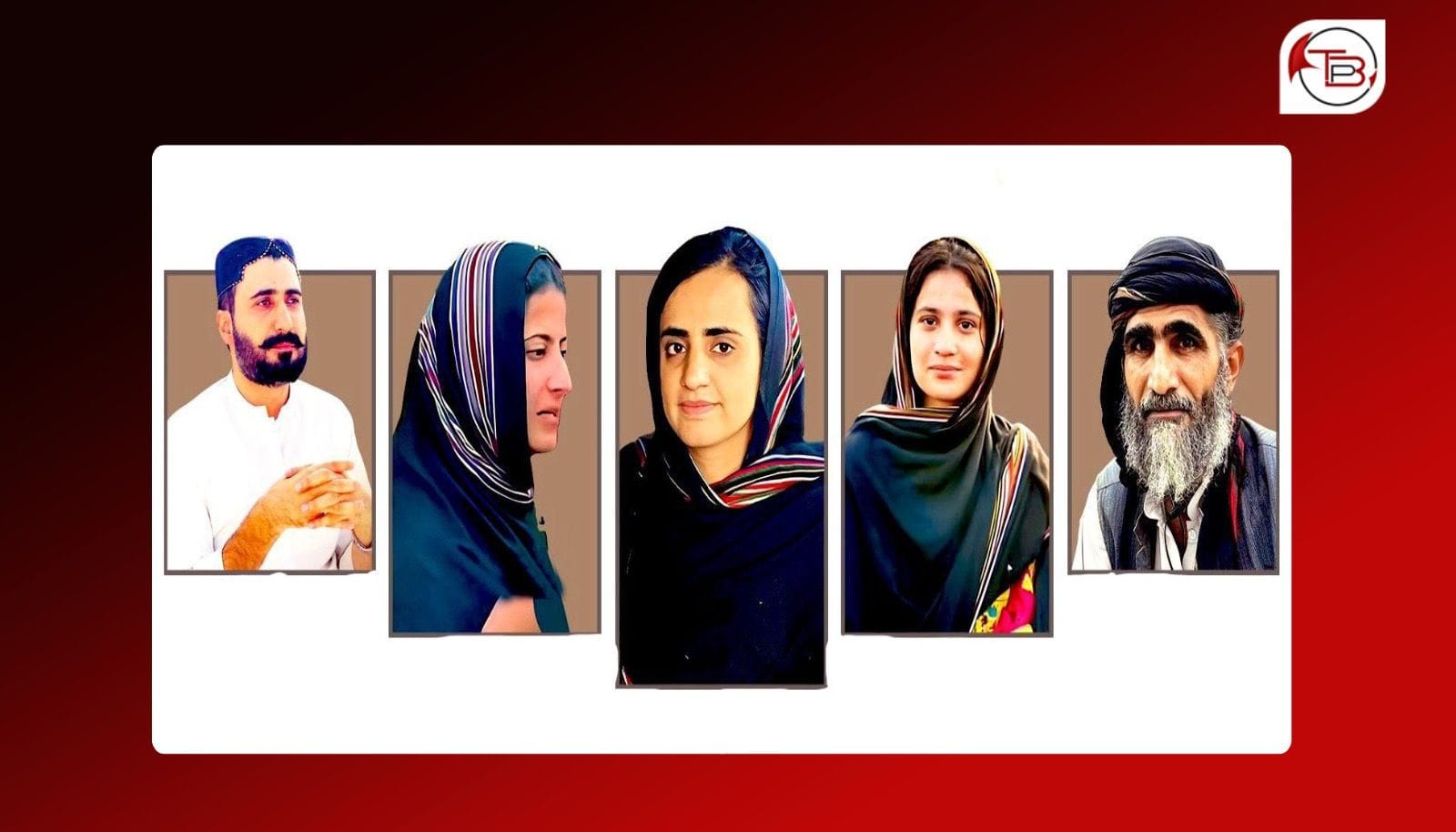
The Baloch Yakjehti Committee (BYC) has accused Pakistan’s Counter-Terrorism Department (CTD) and the judiciary of deliberately dragging out legal proceedings against its detained leaders, describing the process as a “weaponisation of law” designed to suppress political dissent.
In a statement shared on X (formerly Twitter), the organisation said that during a jail trial on Saturday, the CTD once again failed to submit the complete challans (charge sheets) in the case. The BYC alleged that the department has repeatedly delayed the proceedings since the arrests, while the court has “supported these delaying manoeuvres.”
The group claimed that despite the CTD’s failure to provide the necessary documents, the court appeared “in a hurry to frame the case based on the incomplete challan,” which the BYC argued violates legal procedure. The organisation said the case should not move forward until all required documents have been presented.
According to the BYC, the CTD has registered over 25 FIRs (First Information Reports) against its leadership since the start of the case — many of which it described as “fabricated” and intended to obstruct its political work. It said new FIRs continue to be introduced in court despite earlier judicial directions for all allegations to be submitted together.
“This not only proves that the state is weaponising its legal system against Baloch human rights activists but also tarnishes the credibility of the judiciary itself,” the group stated.
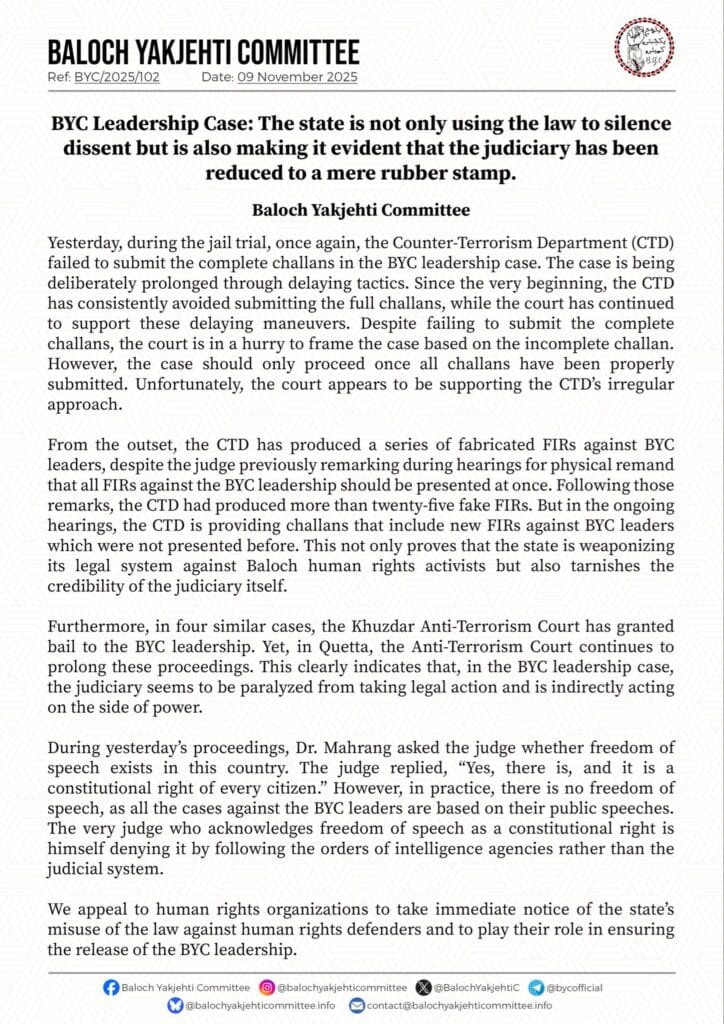
The organisation added that while the Anti-Terrorism Court (ATC) in Khuzdar has granted bail to BYC leaders in four similar cases, the Quetta ATC continues to delay the process. The contrast, BYC said, shows that “the judiciary seems paralysed from taking legal action and is indirectly acting on the side of power.”
During Saturday’s hearing, detained leader Dr Mahrang Baloch reportedly questioned whether freedom of speech exists in Pakistan. The BYC said the judge acknowledged it as a constitutional right but argued that “in practice, there is no freedom of speech,” since all the cases against its leaders are based on their public addresses.
“The very judge who acknowledges freedom of speech as a constitutional right is himself denying it by following the orders of intelligence agencies rather than the judicial system,” the group said.
The BYC accused Pakistan’s state institutions of using the courts as a “rubber stamp” to legitimise political repression in Balochistan. It urged national and international human rights bodies to take notice of what it described as the state’s misuse of anti-terror laws and to intervene for the release of its detained leadership.